Cutting off the Split Ends of Our Souls

Tags

, , , , , ,

imageThe other day I got my hair cut.

Now, that probably doesn’t sound too exciting to all of you.  Hair gets cut. Tresses get trimmed.  Sideburns get shaved.  (Of course, I don’t have sideburns, but you get the point.)  No matter who we are or how old we are, our hair sometimes need attention to keep it healthy.

One fact to know: I hadn’t gotten it cut since November.  Being that it’s now February, I could tell that it was frequently getting hard to control.  My stylist pointed out the hair in the back had been broken off, and I could tell that the hair near my face was splitting.  No longer was my hair healthy, and I had to make the time to get it trimmed.

Keeping my hair at the longer length was, basically, a stumbling block for my hair to be healthy.  My hair would never be in its healthiest state if I kept trying to grow it without cutting it.

Jesus never speaks of hair cuts or even hair very often.  But Jesus does mention cutting off one’s limbs if they are causing the entire body, mind and soul to be unhealthy:

‘If any of you put a stumbling-block before one of these little ones who believe in me, it would be better for you if a great millstone were hung around your neck and you were thrown into the sea. If your hand causes you to stumble, cut it off; it is better for you to enter life maimed than to have two hands and to go to hell, to the unquenchable fire. And if your foot causes you to stumble, cut it off; it is better for you to enter life lame than to have two feet and to be thrown into hell., And if your eye causes you to stumble, tear it out; it is better for you to enter the kingdom of God with one eye than to have two eyes and to be thrown into hell, where their worm never dies, and the fire is never quenched.

-Mark 9:42-48

I’m not exactly sure if Jesus literally meant cut off a limb or poke out an eye.  But obviously, Jesus felt that we need to rid ourselves of unhealthy attachments at times.  And, yes, sometimes it is a drastic as cutting off piece of ourselves as crucial as an arm or leg.

(Personally, I like to a little less dramatic analogy –  much like trimming the split ends from our hair.)

So now that we’re in Lent, what will we trim from our lives so that we are healthier people?  During this journey, what will we expel from our lives?

Will it be that “friendship” that is bringing us down?
Will it be boxes of things we no longer need but is taking space?
Will it be activities in our lives for which we no longer have passion but we feel that we SHOULD continue with that activity?

According to something I read online, the average person only has 29, 200 days of life.  And that’s if we live until 80.  This number may seem like a lot of days, but when we look at how many days have gone by, it’s very eye opening.  We ask ourselves “how we will live the rest of our days?”  When I calculate that I’ve lived about 15,500 days, over half of my life could be complete.  What will I do with the rest?  What can I rid myself of so that the rest of my days are open to the call of God?

Will I rid myself of fears so that I can live more fully?
Will I rid myself of things so that I will have more space to enjoy?
Will I rid myself of hurtful past memories and find forgiveness so that I can live more freely into the future?
Will I rid some unhealthy behaviors – like too many cookies or fried foods – so that I can live a healthier life?

This is what Lent is about: working to become our best selves in relation to God and one another.  It’s examining the twists and turns of life with sober judgment and as we try to grow in body, mind and soul.

So, as you find time for your next haircut, what will you be cutting from your life to make it healthier?  What will you release from your life so that your 27,000-31,000 days are more meaningful to you and those you love?

Thriving in My Weakness: Breaking the Silence This Ash Wednesday

Tags

, , , , , , , , , , ,

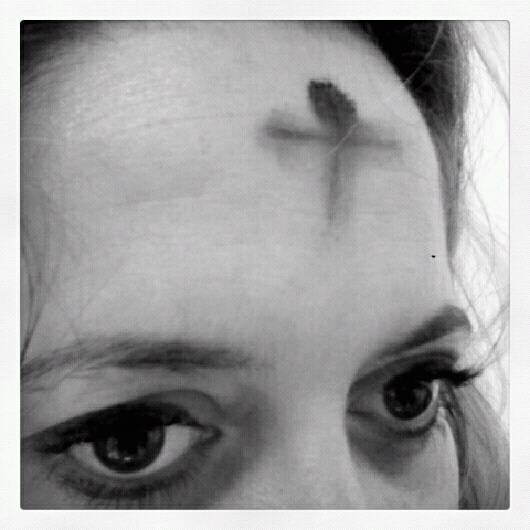
ash headLast summer, when Robin Williams perished from suicide, more people began to come forth about their mental health struggles.  Many believed that if we spoke on the issue of mental health, others would feel like they could share their stories or find help.

My friend Kevin Necessary wrote his story for WCPO.  Another friend, the Rev. Sarah Lund, recently wrote the book “Blessed Are the Crazy: Breaking the Silence about Mental Illness, Family and Church.”  She shared her family’s struggles with mental health issues.  As others placed themselves in vulnerable spaces telling their stories, I began to feel the call to tell my story as well.  That’s when I realized I had to talk about my experiences.

In the summer of 1979, we were on our way from the St. Louis area to southern California to visit my aunt, uncle and cousin, and Disneyland too.  Somewhere in the state of Arizona or New Mexico, we stopped for dinner.  I was already a pretty anxious kid – not a fan of escalators, steps, slides and a host of other things.  But that evening, as a six year old, the least unusual thing happened: I discovered the first loose tooth in my mouth.

At that moment, I began to have my first panic attack.  Over a loose tooth.  But as experience has proven: you never know what will set off a panic attack.

Being that it was over 35 years ago, I can’t remember exactly how that first attack felt.  From what I can recall, I felt out of control and waves of nausea.  I couldn’t eat anything else that night.  Beginning that evening, my eating habits drastically changed.  I consumed very little each day due to the nauseating anxiety in my system.  I lost weight, and my mom did everything she could to help me find ways to eat.  My parents were beyond worried about me, but during eras when people never spoke of certain issues, I would imagine that it would be difficult to find your children the help they need.

Of course, this was in the late 1970’s.  People weren’t talking about childhood anxiety or mental health issues, and even speaking of one’s mental health illness was taboo.  Personally, I thought there was something wrong with my stomach.  I couldn’t put into words what I was going through.

As time went on, I sought help in trying to be find wellness in my soul, heart and mind, and this meant counseling sessions.  At the age of 16, as I headed into the office, I scoped the parking lot for any signs of people I knew.  I refused to let anyone know what I was going through.  I couldn’t let anyone know how flawed I was.  I would have been horrified if anyone knew I was in counseling.  Even my closest friends in high school never knew until years later.  Finally in college, I began to speak with friends about my anxiety, and over the years have been more and more open about this challenge in my life.  My sixteen year old self would never have imagined that I would ever speak or write publicly about this struggle.

I’d like to say that I’ve had my last one, but I know that’s not the case.  I’m on a life-long journey with anxiety and panic disorder.  It isn’t fully gone.  But I’ve learned how to live with it and take baby steps so that it doesn’t fully define who I am.  I realize now that I probably have a chemical or biological predisposition to anxiety or panic.  It’s not something I brought about on my own – six year olds typically don’t bring these things on themselves.  Even forty-somethings or sixty-somethings will have panic attacks happen without any real cause.

Sometimes, it’s been hard to see God in the midst of my anxiety.  I’m sure others find it hard to see God in the midst of their mental health issue – no matter the issue.  But during the other times, God is all I know and what I can see in the chaos.

Paul says in 2 Corinthians 12, “ ‘My grace is sufficient for you, for power is made perfect in weakness.’ So, I will boast all the more gladly of my weaknesses, so that the power of Christ may dwell in me. Therefore I am content with weaknesses, insults, hardships, persecutions, and calamities for the sake of Christ; for whenever I am weak, then I am strong.”

Today, to use the phraseology of Paul, I boast of this weakness of mine.  I boast not from pride, but because I feel free and light in being able to tell my story.  I boast because I see the presence of God in my weakness, and my relationships with God and others have grown closer in this vulnerable state.  And that means, like Paul, seeking contentment in this very vulnerable moment and becoming transparent will hopefully bring strength to the entire body of Christ.

Jesus called the most vulnerable to do his work.  Mary Magdalene found relief from her seven demons – which could have included many mental health issues.  And Jesus called her to be the first person to share the good news after the resurrection.  Paul didn’t exactly have the best track record with life as he persecuted others.  And yet God still called him.  God called Jacob after he deceived his brother, Abraham after dismissing Hagar and Ishmael, David after his indiscretions, and Levi even though his career brought pain to others.

With God, there is grace and there is a future in our weaknesses and vulnerability.  There are second chances to be had and given.

Like dust, like ashes, and even like the powdery snow outside, we are vulnerable.  We are blown by the wind because of the frailty of our human condition.  But in that vulnerability, in that powdery, dusty mess that we humans are, we find our strength.  We find out where God is because sometimes, all we have is God.  And then we start to find each other as we all share our struggles.  To believe that any of us don’t struggle with something is a fallacy.  It’s unrealistic to believe such things.

Our next step in the process is finding the strength to be transparent about some of these struggles – especially once we’ve found some healing and can testify to God’s presence in our healing.

When I tell my story, I feel like this is the most vulnerable place I’ve been.  Like I said – I never realized that 25 years ago or even a year ago I would feel the call to stand up and speak my truth.  But this story needs to be told because maybe a parent out there will recognize that their child has anxiety and panic disorder and will find help for their child.  Maybe one of you will realize that there is no shame in receiving help – whether that help is counseling or medication, whether it’s for anxiety, depression, bipolar or a number of other mental-health related issues.  We may feel that it’s necessary to keep being strong, but actually, we will be healthier if we just admit that we are weak and get the help we need.

And that is why we take this time during Lent to raise all of the voices who break the silence on stigmatic issues.  I stand with all of my sisters and brothers who have the courage to live in the boldness of their frailty.  When we are able to say, “I’m as strong as ashes, and I’m mortal and messy,” then we can move into new ways of relating to God and one another.

Ash Wednesday is the day where we remember that we are mortal, not perfect, vulnerable, and limited.  And we rejoice in our weaknesses.  We thank God that we can come together as limited humans, in our brokenness and dustiness to celebrate the strength in our weakness and transparency.

A Prayer for the Lone Ones on Valentine’s Day

Tags

, , , , , , ,

imageAs someone who often writes on marital status and the church, I feel it necessary to remember those who endure Valentine’s Day on their own.  People splash their privilege of dates and gifts on social media leaving others to feel even more isolated and expendable.  From my experience, Valentine’s Day gives privilege to the haves – whether it’s haves of money or love.  During the many years when I was single on Valentine’s Day, my soul felt so insignificant.  Now that I do have a Valentine with whom I can share my day and my heart, I feel blessed but I must still remember the loneliness that this day will bring many, and urge all of us to send our love to those who struggle today.

God of the broken hearts
And the lonely souls,
On this day reserved for those “loved”
Those who seem so “whole”
Give us the peace of knowing we are complete.

Just as we are.
Today.

On this life-long journey
We wander in the wilderness, sometimes.
And sometimes, we wander that wilderness alone.

We set aside our celebrations
Of pink and red and sparkles
To give our hearts to those who dwell in solitude.
May they discover joy outside of the expectations
That this day brings
And in spite of the chocolates and roses and dinners by candlelight.

For those whose singlehood is new
After a recent break in their lives
God, fill their hearts with peace
And may they see the expanding lights of hope.

For those who have been single year after year
In the shadow-filled tunnels of silence-
Those who wonder when their turn at love will arrive
And feel trapped in exile-
Open their hearts to all possibilities.
Guide them out of the wilderness.

For those who have lost loves to death
And their person abides on that side of heaven,
Uplift their spirits.
Take away the pangs of grief.
Bring light into their lives again.

For those who ache
Wondering if their love will last,
Spark their hearts with the flame of renewal
And may love rise from the ashes.

On this human-created day where some have so much
and others are empty,
Scatter your energy around, God,
So that hope abounds
And joy will be embraced again.

Vaccinating the Body of Christ

Tags

, , , , , , , , , ,

By Photo Credit: James Gathany Content Providers(s): CDC [Public domain], via Wikimedia Commons

Throughout my entire life, My mom would often speak of her childhood experience with measles and whooping cough.  These memories remain traumatic for her as she recalls how she almost died from measles, and as a kindergartner, missed three months of school in the process of recovering.  Both she and my grandma experienced pertussis, or whooping cough, during my mom’s youth.  The trials of coughing to the point of choking left a fearful memory with my mom, and she ensured we had the vaccines needed to avoid unnecessary childhood illnesses.

When I speak with my mom regarding her previous health issues, she expresses the horror of her experiences with these extreme illnesses and the sadness surrounding the time and energy she lost while recovering.  By sharing her stories, my mom has been a great influence on me and, hopefully, others on the importance of vaccines to our population.  Likewise, as I place my mom’s experience in conversation with science, history and theological thought, I continue to strongly support the inoculation process.

Just as we thought that some of these illnesses were nearly eradicated in our first world culture, they seem to have been reappearing more frequently in our privileged communities.  Some have chosen not to vaccinate out of deep fear for their children’s health.  Some have decided not to vaccinate due to receiving misinformation.  Some believe that it is more dangerous to receive a vaccine rather than the risk of contracting the illness.

The conversations surrounding this are complicated and very passionate.  The people who have  experienced the struggles with preventable illnesses often stand firm on their pro-vaccination views. Likewise, those who focus their attention on the dangers of vaccines and the compassion in their hearts for their children both care fully about those closest to them.

In the past weeks, I’ve gotten into some thought-stretching interactions with friends regarding the vaccination debate.  Through discussions, I began to see a myriad of views present in vaccination conversations.  While I may be firmly pro-vaccination, I also must try to understand the other side of the argument even if I don’t agree with it.  So I’ve begun to ask myself “How can I be an advocate AND still refrain from shaming those who believe differently?”

By presenting my view on this, I hope to influence others to realize that they do not make decisions in isolation.

As I look at this issue through the lens of scriptures, I am reminded that we are all part of the same body of people, and many of our choices directly and indirectly impact others within our society. First Corinthians 12 reminds us that we are forever connected with all others.  When we are part of the Body of Christ, we are compelled to acknowledge our connection with every single other part of the body.  We are forced to see that when we choose to vaccinate or not to vaccinate, there is the possibility that both loved one and stranger will be impacted by our choices.

Being someone who does support vaccinations, I believe that when the vaccination option is not chosen it heightens the risk that it will negatively impact the entire body of people.  That being said, we are still part of the same body as those who choose not to vaccinate, so removing their humanity and vilifying them creates chaos in the body.  As we are in covenant with people with whom we disagree, we have a responsibility not to denigrate those who make different choices than ours.  How can we have conversations without shaming the other side?

I posted a pro-vaccination editorial cartoon that my friend Kevin Necessary drew for WCPO.com.  This drawing opened my eyes to another parallel conversation: peanut allergies.  While peanut allergies and vaccinations are two very different and separate issues as reminded to me by friends, they have one common connection: our choices on both of these issues ripple into the world and can have a very positive or negative impact.

When peanuts enter the Body of Christ (or the entirety of humanity) through someone who loves to eat peanuts, there is still a possibility that another member of the body will touch or consume a small portion of those nuts.  In doing so, the allergic individual has the possibility of getting very ill or dying.

If a member of the body of Christ is not vaccinated, there also is a possibility that measles, whooping cough or a number of other illnesses can come into the body.  We’ve seen it recently at Disneyland and through the spread of the highly-contagious measles.  Concerning both peanuts and vaccination issues, we have to work together to keep these lethal possibilities out of the Body of Christ.  Making decisions without thinking of how others will be impacted is neglecting our place in and the constant connection with the rest of the Body of Christ.

The image of this Body of Christ reminds me of conversations I had in college on the principle of utilitarianism which I believe has also influenced my stance on vaccinations.  After some online reading, I found this quote by Francis Hutcheson that expresses this concept of utilitarianism:

When thinking about what’s best for the greater numbers of people, I reflect upon science and history and see that most vaccinations have been positive for the greater number of people.  Thus when we consider the happiness and health of the greater good, we are considering the Body of Christ.

Because of community immunity, or herd immunity, a certain percentage of people in a society need to be vaccinated in order for the larger community to have a strong level of protection .  When the vaccination levels falls below that designated percentage, the Body of Christ and our society becomes vulnerable to illnesses.  What we often forget is that those with no immune system rely on a system where enough of our society is vaccinated.  In reflecting on what’s best for us, we also need to remember those who are too young or have a weak immune system and can’t receive the vaccination.  Pooling our communal immunity together protects those who can not be given an inoculation.

I remember the story in Acts 2 on how the church came together, combining their resources to build the church and sacrificing to support one another.  In our time, vaccinations can be our way to live out our Acts 2 faith of combining our resources together to strengthen the Body of Christ.

No matter what our views on vaccination, we must continue to remember the constant connection between us and the rest of the Body of Christ.  Our decisions should not made in a bubble, and it’s important to weigh the cost of our decisions on how they will impact ourselves, our loved ones and the extended human race.

I highly doubt that I will change my views on vaccination.  But being a part of the Body of Christ continues to shape my heart, mind and soul to open myself to those with other viewpoints.  In doing so, this transformation has given me more compassion for those who are fearful of vaccinating and urged me to advocate for vaccinations to make sure the Body of Christ is as healthy as it can be.

Perspective

Tags

, ,

How do you think changing your location or changing your view would help you better understand a friend, neighbor, enemy or stranger?  What are your fears when it comes to looking at an issue from someone else’s viewpoint?

What will you do tomorrow to expand your view and open your heart?

perspective


The League of God Is Like…

Tags

, , , , , ,

By Gerald Nino/CBP (US Customs and Border Protection archives) [Public domain], via Wikimedia Commons

Looking through social media (Facebook, Twitter and Instagram) I saw  how various people were spending their time watching this year’s Super Bowl.  I didn’t know anyone personally who attended this year.  Most of my friends were either home watching the game and updating social media as the event progressed – few were at parties or bars watching.

But what I noticed were that celebrities were posting picture after picture of themselves in the stands of the game.  And this got me thinking of those who are able to go and who will simply never see a Super Bowl game (or any NFL game, for that matter) live and up close.

I’ve been to a couple of NFL games.  Fortunately, I was able to receive the tickets for free.  Otherwise, I would rarely, if ever, be able to afford a game.

According to a report I found from 2013, the average ticket price for an NFL game is $81.54.  With federal minimum wage at $7.25 per hour, one may need to work 11.25 hours to afford just the game ticket.  The average Super Bowl ticket was about $3,600 according to some sources.  And that means they would have to work 496 hours to purchase an average Super Bowl ticket (or 12.4 weeks of 40 hour work weeks) for a three-to-four hour game.

What I find interesting is that taxpayer money will fund the stadiums which hold the games that many taxpayers themselves can not afford to attend.  So the poor essentially pay for the benefits of the rich.

In 2001, when the Super Bowl was in Tampa, I volunteered at the Hospitality Village.  Only those who had a special ticket could get in.  Sponsored parties were held in various areas of the village.  And then those who were at parties in the village moved over to the stadium to find their seats and the privilege to watch the game live and absorb the excitement around them.

The have nots, like myself, looked upon a stadium that I could not afford to get into.  I’m also guessing that the way sponsorships and VIP passes work, I’m sure many didn’t have to pay for their ticket but they were given the ticket for free.  Often, it’s about who you know.

Yesterday, I mentioned the subversive nature of Jesus in my sermon.  Sure, he may be someone hanging out in the stands during an NFL game.  He did eat with the privileged during his time.  But he also spent time with those who were thrown away by society.  Jesus would have been hanging out near the side of the road with those begging for food and in the work areas of the stadium with those who had to work through the game.  The Hospitality Village would be open to all in Jesus’ realm.

Maybe the League of God would be an NFL game with people of every economic level in a stadium.  Maybe it would be a stadium with the poorest sitting on the sidelines watching the game in the privileged areas while the super-rich were required to have the nosebleed seats.

I wonder how that would turn our society on it’s head…

Looking Back… At All of the Stuff

Tags

, , , , , , ,

looking backI have a lot of stuff.

It’s amazing how we accumulate things over the course of years.  When I moved to Florida 19 years ago this month, everything fit into the trunk, backseat and storage container on top of my 1984 Chevy Celebrity.

Nearly two decades later, everything fits into a few rooms.

I have mountains of books – mostly theological from my seminary years and the past few years of ministry.  And then there are all of the papers and bills from the past 19 years.  And many, many photo albums, DVDs, VHS tapes (that’s right, VHS), mugs with names of banks printed across the front (probably from my years organizing chamber of commerce events), pens, pencils, Christmas decorations and glasses from tourist attractions.

When will I need a power bill from 1997 or paperwork from a job in 2001?  When will I need the size six jeans as my hips will never shrink below an eight or ten?  When will I need an old recording of a Friends episode on VHS?  I own all of the seasons on DVD now and now can catch the episode on Netflix.

Most of these things do not make me happy.  In fact I feel like Lot’s wife: a pillar of salt, unable to move forward, and frozen in a time-warp.  Let’s face it: Sodom wasn’t exactly a happy place for visitors, and neither was the early 2000’s for me… Which makes me wonder: why do we hold onto things and times that remind us of painful places?

I use these items as a god to anchor me to an altered view of the past instead of allowing God to pull me forward towards a realistic view of the future.

Looking back isn’t a bad thing.  Holding on to a few mementos is a beautiful idea.  Photo albums and special gifts will remind me of special days and people of the past.  But rooms of “I may need this one day” boxes are boxing me in to a life that can’t be lived freely with God’s Spirit.

This year, I hope to go through many of those “I may need this one day” containers and begin to release my outdated treasures to the universe.  I may take some photos of old things that once meant something to me and send the item itself to the trash or to someone who needs it.  I may take a few moments with something that reminded me of a special memory but realize that it holds minimal significance to today.

Through shedding material things from the past, I hope to lighten my load to seize today with open hands… and rooms.


This blog was written in conjunction with a SynchroBlog on the topic “Looking Back, Looking Forward.”  Bloggers looking back and looking forward this month:

We Still Need to Talk About Leelah

Tags

, , , , , , , , , , ,

Image via WCPO

This week, my friend Kevin Necessary’s editorial cartoon was published on the Cincinnati news channel website WCPO.com.  The drawing was a cartoon of Leelah Alcorn and a quote from her final letter.  In the comments under the cartoon, many responders desired the conversations to halt.  They used negative words to describe Leelah.  But thanks to the station and those monitoring the site, the conversations continued.

It reminded me of a situation from 2007.

At the time I lived in Largo, Florida.  Steve Stanton was our city manager.  I was acquainted with Stanton from my days working as a membership director for the Greater Largo Chamber of Commerce.  Stanton was a dedicated public servant, working for the city for nearly two decades.

Due to a horrific move by the St. Petersburg Times (now the Tampa Bay Times), Stanton’s true gender identity and upcoming transition was outed to the entire Tampa Bay community.  The entire community was stunned by the news.  The media leaked this story before Stanton could tell her 13-year-old son.

Of course, people in this suburban town couldn’t allow Stanton to remain manager of the city.  Based on her ultra-conservative faith, then-city commissioner Mary Gray Black demanded for Stanton to be fired.

At the hearings, people from all perspectives came to stand for or against Stanton.  A pastor from a local church stated “If Jesus was here tonight, I can guarantee you he’d want (him) terminated. Make no mistake about it.”  I personally wrote letters to each of the commissioners urging them to continue the employment of Stanton.  Unfortunately, with a 5-2 vote, the Largo commissioners chose to fire Stanton in February 2007.  Soon after, Stanton began to publicly identify as Susan Stanton.  It was truly a very embarrassing time for the city of Largo, Florida.  (Fortunately, as of this week, LGBT persons will be able to marry in Pinellas County, Florida.)

Even in 2007, our communities knew very little about transgenderism and weren’t willing to learn more.

People like to continue to believe that our current gender is the only thing that defines us.  Boy or Girl.  Man or Woman.  Be a manly man or be a feminine lady.  Don’t identify outside of gender norms, and don’t identify with another gender.  They call people who identify differently “perverts” or “immoral.”

Here’s how much gender means to our society: if one’s genitals or reproductive organs are not in a specific order, then he or she is considered less than human.  If a person does not identify with their current physical gender, then they are less than human.  They are unclean.  A text from Deuteronomy sticks in people’s minds: “No one whose testicles are crushed or whose penis is cut off shall be admitted to the assembly of the Lord” (Deuteronomy 23:1, NRSV).

What people forget are the words of the New Testament.  Jesus came to fulfill the law, and in doing so, never condemns the eunuchs in Matthew 19 nor does he deem them unclean.  According to Jesus, some are born that way, some have become eunuchs physically or spiritually by their own accord, and some had no choice in the matter and were made eunuchs by others.

So, to answer the pastor who said that Jesus would want Susan Stanton fired: Jesus never said that nor did he allude to ridding our society of genderqueer people.

Additionally, the story of Philip and eunuch in Acts 8 gives us the powerful example that no one is excluded from the Kingdom of God.  Even though the Ethiopian eunich would have been deemed unclean, Philip was called by the Spirit to baptize this child of God.

When our society continues to consider anyone who does not fit within the boxes of gender “norms” unclean – whether they are transgender, express their gender outside of cisnormative, genderqueer, etc. – then our society contributes to the hate crimes and suicides of many of God’s children.

To those people who are “tired of hearing about it” and want to “give it a rest” and “move on”: understand that you are privileged in your gender and your physical self.  You can turn off the news and never have to think about gender identity.  But Leelah couldn’t turn this off.  Leelah couldn’t give it a rest or move on.  And that is why Leelah took her own life.

Indeed, we can’t move on yet.  We need to continue to talk about this because, someday, many of us will lose a family member or friend who is transgender – either through suicide or hate crime.  Maybe some of us already have lost a loved one because they couldn’t believe society would accept them as genderqueer.

According to the Williams Institute and the American Foundation for Suicide Prevention:

The prevalence of suicide attempts among respondents to the National Transgender Discrimination Survey (NTDS), conducted by the National Gay and Lesbian
Task Force and National Center for Transgender Equality, is 41 percent, which vastly exceeds the 4.6 percent of the overall U.S. population who report a lifetime suicide attempt, and is also higher than the 10-20 percent of lesbian, gay and bisexual adults who report ever attempting suicide.

Those of us who identify with the gender in which we were born can not understand the struggle that a transgender person will endure.  Our physical, mental and spiritual selves are complex.  In some people, the physical does not match the emotional or spiritual.  The brain is an intricate organ.  As fellow humans, it’s important to recognize that when a person identifies with the opposite gender than the one in which they were born, it’s not an immoral act.  They aren’t selfish or a pervert.  They aren’t somehow more “specially depraved” than anyone else. However, they are enduring struggle that those of us who aren’t transgender will never understand.  Taking time to listen to and appreciate their journey instead of casting judgment will continue to build a community of compassion.

Leelah stated in her final note “The only way I will rest in peace is if one day transgender people aren’t treated the way I was. They’re treated like humans, with valid feelings and human rights.”  In memory of Leelah and our loved ones who have died, and in honor of Susan, let’s try to treat people of all genders, gender expressions and gender identities as humans – all made in God’s image.

I don’t know much about transgenderism or being genderqueer, and I write this out of respect of my transgender sisters and brothers.  If someone from the community knows more and any of my information is incorrect, please contact me.  

About That New Year’s Resolution…

Tags

, , , , ,

I start the year thinking I will start anew, begin a new habit and get this year right.  However, that’s never how it works.

*I never take all of my vitamins each day.

*I never use the face cream I bought.

*I never make one of my bucket list trips I’ve wanted to take year after year (specifically New York City, the United Kingdom, France or Italy).

*I rarely stay on a diet and/or lose a few pounds.

*I rarely go to the gym multiple times per week each week of the year.

*I never read more books, watch less TV, spend less time on social media.

*I rarely go through boxes of old things from 10 years ago and discard items I will never need again.

I highly doubt I will successfully accomplish any of these things in 2015.  I will attempt a few of them – especially the ones that apply to my health.  With that said, I’ve decided on two definite new year’s resolutions:

(1) Do my best.

(2) Give myself grace.

I’ll let you know how that works…

Between Child-Free and Childless at Christmas

Tags

, , , , , , , , , , , , , ,

By Michelle Tribe from Ottawa, Canada [CC BY 2.0 (http://creativecommons.org/licenses/by/2.0)%5D, via Wikimedia Commons

On Christmas Eve, I stood before the congregation and read the narrative of Mary visiting Elizabeth.  As I read aloud from the pulpit, my heart ached a bit when coming across these words:

“When Elizabeth heard Mary’s greeting, the child leaped in her womb. And Elizabeth was filled with the Holy Spirit and exclaimed with a loud cry, “Blessed are you among women, and blessed is the fruit of your womb. And why has this happened to me, that the mother of my Lord comes to me? For as soon as I heard the sound of your greeting, the child in my womb leaped for joy.” – Luke 1:41-44

At 41 years old, I’m pretty sure that I’m beyond having children, at least an infant.  (I have wondered if I’m called to be a mom to an older child someday in the future.)  With some of my health concerns, including my endometriosis, I have higher risk pregnancies, chances of infertility and miscarriage.  On top of all of this, I find myself exhausted so much quicker, and only sleeping two or three hours would disturb my health even greater.

I also enjoy my life the way it is.  I absolutely love being a full-time pastor.  I enjoy spending time with friends as well as my niece and nephew.  I love working with the children at church.  But I know that my call is greater to be a full-time working woman rather than one that devotes part of her life to children.  Being a mother is a blessing and a call; likewise, devoting one’s life to a vocation is a call as well.

A few months ago, I wrote about my gray-spaced life as a woman existing between childless and child-free.  Even for those of us who lean towards not having children, the thought of never experiencing a life thriving within us brings a tinge of sadness.  In fact, I think that’s the toughest part for me.

I will never feel the stirring of a child.  I will never see anything besides an empty uterus on the ultrasound.  I will never see my belly blissfully full from a growing baby, and I will never watch it moves as she moves within me.  Even if I love my life child-free, the ions of childlessness still create a sadness.

So reading the previously noted portion of Luke 2 made my heart hurt just a little on Christmas Eve.  I can’t be sure if I was the only one or if there were many others sitting in our pews crying inside because of infertility, miscarriage or the way life has just worked out.

And just maybe a small part of me felt left out of the pregnant ladies club… the one in which the Elizabeths and Marys get together to watch their growing bellies and converse in joy about the movement of the child in their wombs….

My soul still magnifies the Lord for all the wonderful pieces of my life.  The “Mighty One has done great things for me,” and Her name is still holy.

But just for a moment, I embrace the sadness lingering inside of my empty womb.