By US National Park Service emloyee (nps.gov) [Public domain], via Wikimedia Commons
This was a poem I wrote on September 18, 2001. Prayers for all of those still affected by this horrible day in our history.
Butterflies dance round flowers’ bloom
And spring turns into summer warmth.
The boys run up and down the beach
As sun beams set on Monday’s eve.
To sleep, to travel to the morn,
And as we get to sun’s slow rise
The day is born – a stillborn birth
For not to see the livelong day.
The flames put out the clearest skies
And soot to cover cleanest souls.
To march away from death’s abode,
A funeral’s march across the bridge.
The bride today has lost her groom,
In gloom she stands among the wreck,
She sings a song of lonely woes,
He hears her song but not from earth.
And turning back to see the place
Where Satan’s hand grasped many hearts
No fear, God’s touch now wipes away
The dust, the anger from their souls.
And as the night of death’s stale breath
Turns into day, a new sun’s here.
And butterflies roam with shadowed wings
Their flower’s gone, they fly away.
Earlier today, an interview with Jennifer Aniston was broadcasted on the Today Show. She stated to Carson Daly:
“It’s always such an issue of ‘are you married yet… have you had your babies yet?’ It’s just constant… I don’t have this sort of checklist of things that have to be done, and … if they’re not checked, then I’ve failed some part of my feminism or my being a woman or my worth and my value as a woman because I haven’t,.. birthed a child… I’ve birthed a lot of things, and I feel like I’ve mothered many things. And I don’t think it’s fair to put that pressure on people.”
When interviewing Gloria Steinem back in February, she stated “Being in the public eye, us women come up against this, that our value and worth is dependent on our marital status and or if we’ve procreated.”
It’s not just people in the public eye, Jennifer.
I remember the pressure that starts somewhere around 21 years old. Who are you dating? When are you going to get engaged? Are you planning on having children soon?
Could we please have a little time to figure out what we want? In fact, can I have a lifetime to figure out my life?
Immediately after college, I ran into the mom of a classmate from grade school. Her son was getting married and “achieved” the privileged position of having his engagement in the local paper. She then inquires “so… when will your picture be in the paper?”
See. No pressure.
Over the years, I’d catch up with high school and college friends after a few months. One of the first things out of their mouths was always “Are you dating anyone?”
I’m really not sure if they were trying to make casual conversation, if they really cared about me or if they were seeing how far along I was in the checklist.
I would grade my life an A on life’s wilderness and a D on life’s checklist. My life has been about the journey, the people I’ve encountered and the experiences I’ve embraced. I’ve experienced great things like receiving a master degree, having a one-act play staged, writing for religious sites, living in various areas in this country and being ordained. But according to the orthodox life checklist of marriage, babies and house, I have accomplished little.
So here I am asking you today.
Please. Pause.
Think before asking single people about their dating lives. If the non-married friend feels like sharing with you, you will know. You’ll may see photos of the new couples on social media. You may hear a former singleton ask if they can bring a date to your party. If the relationship is substantial, you will undoubtedly hear about it.
After a couple is dating for a while, think before asking them when they are getting engaged. Stop making comments along the lines of “When are we going to hear wedding bells” and “Let me know when the date is set.” They may not know and may not be in the place of their relationship to discuss this level of commitment. But all of us in relationships can tell you this: it’s rarely anyone else’s business. It’s between God and the two people who are considering sharing a life-long covenant. Please pause before asking a divorced friend if she or he is dating again.
After the engagement happens, it’s understandable to wonder when someone will set the date. Some people choose to remain engaged for a longer period of time. Please rethink your comments to the engaged person on the length of their engagement. Maybe they’re waiting until a family crisis is over or until they’ve saved enough money. But they may not feeling like they need to offer an explanation to why the wedding has not happened up until this point.
Once the couple is married, reconsider before asking them when they will have children. Deciding to have a family is a huge decision. It’s not a choice that two people should take lightly. Having children is expensive and has the potential of requiring one person in the relationship to place their career on hold. Furthermore, the couple may be having issues with infertility or other reproductive losses, and they do not need you to remind them of what they don’t have in their lives.
And then, finally, pause before asking when the next child will come along. One child may be enough for a couple. As I mentioned maybe the couple is having fertility issues. Again, if and when the second, third, fourth or seventh child is on its way, they will tell you.
So why can’t we encourage one another from our different life paths? Why must we force people onto a specific life checklist? Right now, is there a piece of you that wants to make the person feel bad for not “completing the list?” Or are you genuinely concerned about the life of the person? Instead, would you be willing ask them how they are doing, what is new in their life or inquire about a hobby/job/etc. with which they are already involved?
There are certainly friendships where asking these questions are normal for the relationships – you are close and talk about many intimate life details. But if you rarely talk with a friend, why would you ask them so many invasive questions?
I know I’ve asked the invasive questions, and I’m truly sorry that I did. Sometime, I was uncomfortable of where I was on my journey, and asking the question was my attempt to work through my own insecurity. One time after being asked “are you dating someone” for the billionth time by a good friend from college, I asked her “when are you starting a family.” (Maybe because I was tired of being asked the question by this friend.) She got quiet and said to me, “we’re trying.”
From that encounter I realized that these questions are sacred ones, and we ask them with great care. Whether it’s extended singlehood, divorce, finances, challenging marriages or infertility, we all encounter struggles in life.
I remember the Genesis story of Rachel, waiting years before being able to marry Jacob, and then struggling with infertility. She watched her sister get married and have children with the man she loved, and had to patiently wait for the time when it was right for her to “complete the list.” And then there was Hannah in 1 Samuel, struggling with the shame she received from Peninnah because of infertility.
Questions like these which seem harmless can bring shame and embarrassment to our friends or acquaintances. Let’s stop the exhausting shaming inquiries. And let’s focus on the beautiful small moments of life.
Yes, I performed this “remembering my baptism” ritual myself. As the frigid waters ran down my head, face and back, I tried to focus my attention on the hope that my actions would somehow point to a greater cause.
But I couldn’t help it. I still focused on how cold the water was as it ran down my body.
When I first saw this fundraiser and awareness, I thought it was a bit gimmicky. Dumping a bunch of water on our heads: who does this help? Are we talking enough about the disease as we film these videos? Or are people just dumping water on their heads without giving a care to this horrible illness?
And then my little sister nominated me. I couldn’t escape the ritual.
As I continually watched videos of friends and strangers taking part in the ALS Ice Bucket Challenge, I realized that icy water and a cause are drawing all sorts of people together. We are no longer individuals but connected by this ritual of pouring a bucket of ice and water over our heads in the name of stopping an illness. From Robert Downey, Jr. to Oprah to Tom Cruise, from the child heading into kindergarten to the retiree in their 70’s, and from the famous actor to the local church pastor, we join together to take part in a common ritual and cause.
This ritual became more than a gimmick. It became more than a dare and more than a simple yet widespread fundraiser.
For me, it was a chance to remember my baptism.
As water is poured on our heads or as our whole bodies are immersed in a pool, we experience that same type of connection to others in our faith. That is baptism. As humans and as Christians, we are not alone in this messy life. In the ritual of baptism, we are reminded of grace in community. As we watch a small child or teen or adult experiencing the trickling water across their foreheads, we remember whose child we are. Our messiness as humans continues well after our baptisms but the water will always remind us that God’s grace is present with us as we abide with God and community.
So as we watch our next friend or favorite sports team dump a bucket of icy water as they stand in the warm summer sun, let us remember our connection to the greater Church, our connection to those who struggle each day with the degenerative illness of ALS, and our greater connection to all of humanity.
I’m not sure that lends me to give my opinions on what is going on in Ferguson, MO. Yet by living in the St. Louis area throughout my entire childhood and having conversations about race and reconciliation inside and outside of seminary classrooms, I have some passionate thoughts on the subject.
If you live in the St. Louis area as I did in my childhood and throughout college and seminary, you notice that many areas are either white or black. While there are a few integrated communities, it seems though each race has their designated space to live.
My first residence was in East St. Louis for the first three months of my life. My parents moved closer to my dad’s work in Belleville. My grandparents, who lived in my first residence, stayed there for another decade. Based on what I remember when visiting them, they may have been the only or one of the few Caucasian families still in their neighborhood.
I remember people often talked about this fear that the people of East St. Louis were going to “move up the hill” to Belleville. People continued and still continue to move farther away from Belleville’s West End because of this fear.
I’m guessing other areas of St. Louis experienced white flight similar to this. Is it because people assumed racial minority equaled dangerous? Or did people continue to hold on to their racism from the 1960’s?
When I entered seminary in my thirties, my friends of color would talk about their fears of living in Webster Groves. I couldn’t understand. To me, Webster Groves was this safe suburban community filled with large homes and prestigious schools.
But that wasn’t the experience of my friends. One told me “I couldn’t go running at night. I just can’t do that – someone will think I did something wrong.” She told me that our black classmates and friends feel that they would be pulled over by police based upon the color of their skin. And then she said something to me that really opened my eyes: “I can’t fully be a whole person in Webster Groves.”
When you live in privileged areas, only some people are given the rights of being made in God’s image. Others have to embrace a lesser form of personhood.
Hearing the words “white privilege” for the first time made me completely uncomfortable. As a woman I don’t feel extremely privileged. Sure, I may not be as privileged as another white person based on my gender or socioeconomic group. There are times that being a woman does not make life easy – especially when it has to do with bodily safety.
But I am privileged beyond what I will ever realize.
I can drive in suburbs and never wonder if I will be pulled over because of my skin color. I will be treated with greater respect at stores. People will not assume I will cause trouble because I am white.
Some time later, I took a class on race and reconciliation. There was one day where the conversation became extremely heated. The pain of what was happening in predominantly black neighborhoods and the discrimination to our sisters and brothers all over St. Louis was expressed very explicitly that day.
That day still remains at the forefront of my memory, especially when watching these events unfold in Ferguson. I recognize the pain as many march on the streets.
From all of these conversations, it was like I took the “red pill” in the movie The Matrix. I can’t unsee the systemic racism that exists in our communities. The flame of justice and peace that was ignited in seminary continues to burn brighter within my soul as I watch news reports of North St. Louis County.
All I can assume is that these acts of protests, riots and looting stem from this deep systemic pain. As a white person, I can’t accurately represent their pain. But from the gift of many conversations, I know it’s there, and they have every right to voice their deep anguish. When people face discrimination, violence, a disproportionate number of incarcerations, lack of quality education programs as well as adequately-paid employment options, food and basic needs, there’s less hope in their communities.
As a Caucasian, I can tell you that we don’t experience what minorities and marginalized people experience. All we can do is try our best to point to injustices that linger in our communities.
What I’m writing here is intended for a primarily white audience — to share my story of privilege awareness. As Caucasians need to start to do our best to see it from a different angle… not from our comfy suburban coves or up on hills away from “those people.”
When a family of color moves into our neighborhood, let’s not contemplate moving to a “whiter” area. Let’s invite our neighbors over for coffee or dinner and begin to build the relationships. When you see the looting on TV, don’t just focus on that one piece of the situation. Instead, focus your eyes on the people who are trying to pray over the communities and lead communities to peace. Listen for the people who are trying to bring all sides together for dialogue, and join those conversations. Notice the people who are trying to stop looters and clean up the messes a few hands have made.
And let’s spend some time with our friends of various background. Maybe we’ll hear the deep pain that resides within them from discrimination.
These are baby steps, but we need to start somewhere.
I believe it was a matter of time before this happened to a community in St. Louis. The people of color in St. Louis have been living in pain that many of us will never understand in our lifetimes. As a white person, I don’t know how to support them as I should, and I know I will fall short.
I will continue to make mistakes. You will continue to make mistakes. We’re human. But how can we be better the next time?
When we misspeak and return to our privileged ways, we need to stand back up and continue to try to bring about God’s kingdom of peace and justice.
And I will say this: I don’t want to hear that the people who are expressing their anguish should be “whipped,” and please stop calling them “those people.” They are part of all of us – part of the Body of Christ, part of God’s creation. No matter what our color, we’re made in God’s image.
Yesterday, the lectionary text was Jesus encountering the Canaanite woman (Matthew 15). Her ethnicity and set of beliefs led Jesus to group her with the “other.” She called Jesus out on his moment of discrimination, and he changed his view of her and his process of ministry to those outside of the Jewish faith.
Let’s be like Jesus, the one who taught us how to set aside our prejudices and love our neighbors unconditionally.
Robin Williams. By John J. Kruzel/American Forces Press Service (Americasupportsyou.mil article) [Public domain], via Wikimedia Commons
Like many of you right now, I’m processing the death of actor Robin Williams. His comedic timing and infectious energy permeated our hearts. Reading many status updates in the past two hours, I see that this one death has left a very large hole in our culture.
It breaks my heart that someone who brought joy to thousands of others has endured a silent struggle with mental health issues.
In remembering his life, we tend to recall lighter comedies like Aladdin or Mrs. Doubtfire or significant mentor roles like Mr. Keating in Dead Poets Society or Sean McGuire in Good Will Hunting, overlooking some of Robin’s performances in lesser known roles.
In 1998, Robin Williams led the cast of What Dreams May Come, a feature film about a man who risks his soul to rescue his wife, Annie. His character loses both children to a car accident, and then Chris himself dies in a similar manner. His wife cannot escape her depression. She commits suicide to escape her life of pain.
On the other side of heaven, he hears that his wife decided to take her own life and that she is confined to hell. Determined to be reunited and rescue her from her self-imposed eternal damnation, Chris sets out to explore each layer of heaven and hell to find her.
He uses every bit of his afterlife energy, and in her own Sheol, a shadow-filled underworld, he finds her.
Many in our society believe that people who kill themselves bring upon themselves eternal damnation or a self-imposed confinement to hell. Yet I believe that God is much like Chris in What Dreams May Come: searching for us, sitting with us in Sheol and helping us find a way out. God knows that mental illness is just that: an illness. And God never abandons us no matter what illness and no matter if we are barely thriving on this earth or barely existing in the afterlife. God’s pursuing love is chasing us on every level of the afterlife to help lead us to heaven.
Psalm 139:7-12 says the following:
“Where can I go from your spirit?
Or where can I flee from your presence? If I ascend to heaven, you are there;
if I make my bed in Sheol, you are there. If I take the wings of the morning
and settle at the farthest limits of the sea, even there your hand shall lead me,
and your right hand shall hold me fast. If I say, ‘Surely the darkness shall cover me,
and the light around me become night’, even the darkness is not dark to you;
the night is as bright as the day,
for darkness is as light to you.”
And that’s where I believe Robin Williams is: with God. That’s where I believe all people who commit suicide are. There is no afterlife hell for people who struggle with mental illness and commit suicide. God’s grace is bigger than any condemnation or judgment. God knows of Robin’ pain, and God is doing everything that God can do to be with him right now – from Sheol to heaven and everywhere in between.
Many people including some of you reading may be contemplating suicide because the pain feels too great. However, there is help and hope if you struggle with depression or other mental illness. Your life is valuable to many people. Visit the National Suicide Prevention Lifeline website at http://www.suicidepreventionlifeline.org/ or call (800) 273-TALK (8255).
This post is based on a sermon delivered at St. Paul United Church of Christ on July 27, 2014.
If I speak in the tongues of mortals and of angels, but do not have love, I am a noisy gong or a clanging cymbal. And if I have prophetic powers, and understand all mysteries and all knowledge, and if I have all faith, so as to remove mountains, but do not have love, I am nothing. If I give away all my possessions, and if I hand over my body so that I may boast, but do not have love, I gain nothing.
Love is patient; love is kind; love is not envious or boastful or arrogant or rude. It does not insist on its own way; it is not irritable or resentful; it does not rejoice in wrongdoing, but rejoices in the truth.It bears all things, believes all things, hopes all things, endures all things.
Love never ends. But as for prophecies, they will come to an end; as for tongues, they will cease; as for knowledge, it will come to an end.For we know only in part, and we prophesy only in part; but when the complete comes, the partial will come to an end. When I was a child, I spoke like a child, I thought like a child, I reasoned like a child; when I became an adult, I put an end to childish ways. For now we see in a mirror, dimly, but then we will see face to face. Now I know only in part; then I will know fully, even as I have been fully known. And now faith, hope, and love abide, these three; and the greatest of these is love. ~~ 1 Corinthians 13:1-13
It was a cinematic grand romantic gesture that has been spoken about and referred to in pop culture throughout the past 25 years. In the movie Say Anything, Lloyd Dobler, played by John Cusack, stands outside of his ex-girlfriend’s window at dawn holding a boombox over his head, playing the song “In Your Eyes,” in the attempt to win her back.
The act has been imitated in pop culture again and again. It’s a very sweet deed. Maybe a teen or twentysomething would think that this is the greatest act of love, and as a young person, we would expect someone to hold up a boombox outside of our window to win us over. Maybe at 16, when this movie was released, I would have believed that this was the ultimate act and display of love.
But is this love? And why do we see this surface love in so many movies and pop culture references?
Let’s move from the grand gesture of standing outside of a window with a boombox overhead to the song that’s playing on that boombox. A few years before the movie came out, musician Peter Gabriel released the song “In Your Eyes” which was featured in that scene.
The lyrics of the song resound a love that goes deeper into the heart of God, a love that’s more than a grand romantic gesture:
“In your eyes
The light, the heat
In your eyes
I am complete
In your eyes
I see the doorway
To a thousand churches
In your eyes
The resolution
In your eyes
Of all the fruitless searches
Oh, I see the light and the heat
In your eyes
Oh, I want to be that complete
I want to touch the light
The heat I see in your eyes”
Both this song and today’s scripture are reminders of this complete self that exists in God’s eyes, and the hope to see each other through God’s grace-filled, unconditional loving lens.
Today’s text is one that is often read at weddings. It was probably read at many of your weddings and if not, you have undoubtedly heard it at a wedding. Unfortunately, the most important part, at least in my belief, is often left out. Some people stop reading the text at the point where it says “love never ends.” To me, the most sacred part follows this. The text reads: “For now we see in a mirror, dimly, but then we will see face to face. Now I know only in part; then I will know fully, even as I have been fully known.” I believe this is an extremely important piece of scripture to be read at every wedding. It’s a great reminder to a couple that you won’t see each other as God sees you all of the time, and it’s something you’ll have to work at over and over again. In this lifetime, we see God, our neighbors and ourselves through that dimly lit mirror.
Granted, true unconditional love is patient and kind, not envious, boastful, arrogant or rude. But there is something deeper about this love that we are called to have – not only with our significant other but with all people. It’s a love we can experience when we use God’s lens in seeing one another.
The second most important piece of this text, again in my belief, is the verse “When I was a child, I spoke like a child, I thought like a child, I reasoned like a child; when I became an adult, I put an end to childish ways.” The love we experience and give will transform over time. Sure grand romantic gestures are a wonderful and refreshing surprise in a relationship – even in a marriage after 25 or 40 years. But our understanding of love continues to evolve as we grow and as we continue to set aside our childish ways. When we are a young person, we think love is the feeling we have when we fall in infatuation the first time. We want to hold boomboxes over our heads as we proclaim to the world how we feel about this person. But love is much much more than a feeling. Our view of love continues to transform from fireworks going off in our hearts to something deeper – a relationship which indicates that we are trying to see the other person from the lens of God’s unconditional love.
The third most significant piece of this text in my view is the verse “It bears all things, believes all things, hopes all things, endures all things.” The amount of hope that is in this verse can transform any type of relationship from one that could fall apart to one where possibilities can happen. Looking through the eyes of God to our loved one, our neighbor, a stranger and our enemy brings about possibilities that we may never thought were possible, including healing and peace.
In our marriages and all sorts of relationships, we’re going to mess up. We’re going to be our awkward, messy selves. The question is: will the people who matter see us as God sees us? Over time, we realize that in our health and in our illnesses, people show us love. In our deepest grief and in our greatest celebrations, people are around to love us. Love is greater than the chaos in our lives. The people who see us in just the slightest way God sees us will stick by us in almost any situation. They will see a more complete version of ourselves
The reaches of love as refer to by Paul extend to all sorts of relationships. From that of a married couple to the relationship between Christian brothers and sisters, this love is one that calls for us to look through the lens of God’s eyes, to continue to grow in the way we look at love and to hold on to hope even when relationships seem hurt or broken.
How have you looked at someone through the eyes of God recently? How did it change your view of them? How have you looked at your spouse or significant other lately? What about your children, other family members or friends? And how about the person you can not stand? If you were to close your eyes right now and put on your God-glasses, how could your relationships grow stronger?
Yes, God is the God of romantic gestures, of boomboxes overhead as music plays at dawn to woo a lost love. God is the God who would hold the boombox outside of our window to draw us to Her or Him. God is the God of weddings, of romantic moments that refresh us and first loves.
And God is the God of dimly lit times in marriages and shadow-filled friendships, of sickness and bad times, in poverty and loss. God is the creator of hope and endurance in our relationship journeys. God is the one who helps us see that we are complete in each others eyes.
May we embrace the romantic love of youth and the deep love that we find in the dimly lit spaces. And may you find the lens of God to see others as God sees all of us. Amen.
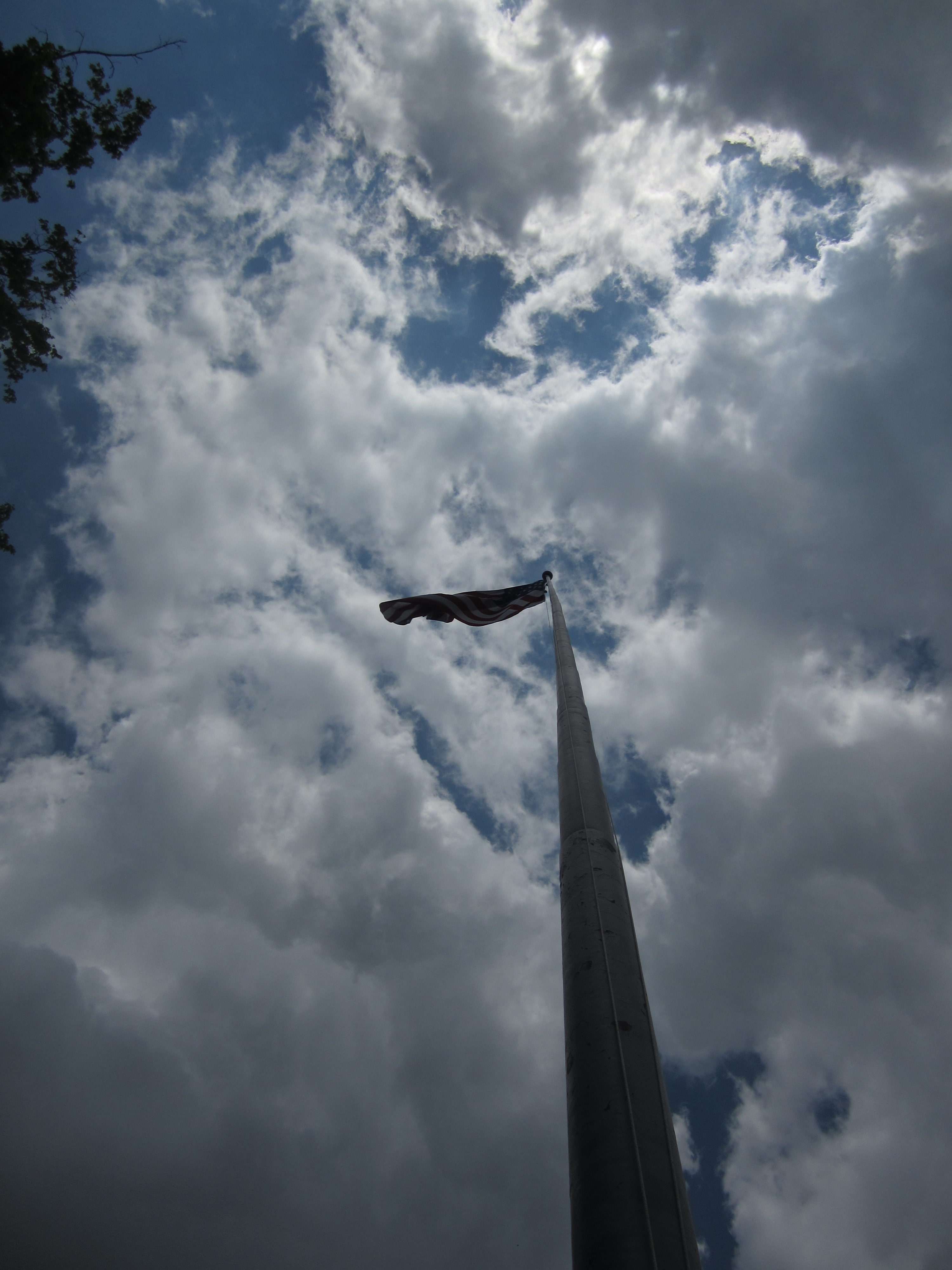
By National Park Service (National Park Service [1] [2]) [Public domain], via Wikimedia Commons
God of all citizens and residents and aliens and visitors,
The excitement pours out of the hearts of those who desire to make this home.
The nerves jump as they wonder what the future holds
And the time to interview gets closer and closer.
May rocky nerves be smooth as pebbles
And may their vocal chords vibrate coherent answers.
God, you walk with us on every path
From the northern border to the southern states
And on both sides of the equator.
You are everywhere.
You are here.
So on this path today-
As information is asked and given,
And tests are taken,
And worries are high,
And butterflies wrestle in tummies-
We know you are there drawing the very best out of us.
Whether we are citizens or visitors, aliens or residents,
Call us to serve our communities, nation and world
with integrity, passion and love. Amen.
Dedicated to my mom on her citizenship interview today, July 10, 2014.
I love our country, I love being an American, and I think the United States is a truly beautiful nation. However, I am a firm believer in the separation of church in our state, and the state in our churches. I believe that both should cross each other very rarely.
Now, without a doubt, those of us who are Christian leaders should be praying for the health of our nation. We should be praying for those in power, no matter what party they are. We should give thanks for the people who have positively shaped this country for what is now is – remembering those who stood for “liberty and justice for all” over the past few centuries. We should remember those who serve this country and the people within this country – from our service members to our teachers. Even thanking God through the singing of “America the Beautiful” makes sense to me.
But what is the correct amount of patriotism for us to have in our sanctuaries and embedded in our worship experiences? And when do we set the patriotic fervor aside to hold our nation accountable for its shortcomings?
When I see Jesus, I didn’t see someone who celebrated Rome. He challenged both faith communities and the state. Rome was intimidated by this Jesus; otherwise he wouldn’t have found execution by the Roman state. Sure, I believe Jesus acknowledged our duty to the state when he told us to give to God what is God and Caesar what is Caesar’s. But never at any point in the Gospels or other scripture texts does it indicate that he sung songs to celebrate Rome or celebrated its symbols in any fashion.
On one hand, my faith and call dictate that we should hold the state accountable similar to the ways Jesus held the systems accountable in his day. We should raise up the needs of our country’s people with the passion of the Hebrew prophets. As a spiritual leader, I have a responsibility to explore this perspective with those I teach.
On the other hand, my faith and call mandate that I hold the hearts of those who value our country and its symbols. As pastors, we have the responsibility to value the places where our congregants are – both as individuals and as a community. While every church is different and approaches the patriotic holidays with various amounts of excitement, taking into account their pastoral needs is part of our jobs as clergy. In our churches, our congregants want to hear patriotic songs. They want to see this country’s flag. They want to cherish the state in which we live. As we get to know our congregants we may see that this need is deeply rooted in their souls.
Some of us pastoral leaders do not understand the draw to such patriotism in our worship. I can tell you this: many of those who want the patriotic elements of worship have pure, beautiful hearts and truly see God’s presence interwoven with our country.
But not every faithful Christian and American feels this way. For those of you who are reading this who may wonder why spiritual leaders and others do not want patriotic elements in worship, it’s because we believe our focus is on the God of every nation, not just ours. We believe that the state and its symbols have the potential for becoming another god or distracting us from ours. And we believe that it’s our place to be prophets in this country, making sure to stand up for the “least of these.”
So many of us church leaders wonder each year, how do we handle the balance of being like Jesus who challenged the broken systems AND the caring for the pastoral needs of our fellow Christians who have pure love for this country? How can make sure the only god in worship is our God and that the flag and country still remains “under God”? How do I balance your beliefs and needs with my beliefs and needs?
Within our worship service, could we sing of our love for our country, pray for the needs of our country and world and acknowledge where our country falls short? Could the sermon celebrate our passion for our country while still challenging the Americans in our pews to do justice? Can we love ourselves for where we are today AND continue to strive even more to take care of the widow, orphan and aliens? Can we remember that not everyone is equal and that “liberty and justice for all” is still a dream?
I don’t believe it’s a sin to love our country and state this in front of God. But I do believe its a sin if we love our country more than or at the exclusion of loving God and our neighbors.
I believe there’s a place for all of us in our churches. Let us remember the God of the prophets as we celebrate with joy our pluralistic nation. May we remember that God wants the United States of America to flourish, to be a place where the least of these have a voice and justice. May we remember that our country has its special gifts but also has its weaknesses too. And may we remember that God wants all nations to be a place of justice and peace.
At this very moment I have a strong love/hate relationship
With the art that you have made,
The shape that you have molded.
Through the stress of everyday life
And delicious foods
And lack of gym time
And probably my age
My body has changed.
It’s not my most ideal self-
Not because of my looks
But because I breathe heavy climbing the stairs
And I’m a bit more fatigued than before.
I admit that I must transform,
To find my balance
To value your creation.
Allow me to see that this transformation
Isn’t about pleasing society or someone else-
This revision of myself is to become the healthy me,
The one that wants to live to 99.
Alter my mind to see that I am beautiful
No matter the girth of my arm or ankle.
(And remind me to stop calling them “cankles…”)
Alter my soul to be happy
And not lean on another cupcake to cheer me up
(Because there will be times when I think I need another cupcake…
We know this about me, God.)
In the meantime…
Lead me not into the temptation of shaming my body.
Help me to cherish each extra inch as long as it lasts on my frame
Because every inch of me is still made in your image.
And may I not duck out of photos
Due to my fear of seeing this version of myself.
And while you’re at it,
Let’s change the way society sees bodies.
Thin, fat, curvy, whatever… it is all beautiful.
Let’s stop this message about getting the bikini body back
Or losing the baby bump in record time.
Let’s savor the moments-
Of deliciousness and balance. Amen.






 Michelle L. Torigian