• Email Sign Up
  • Following me around the web…
  • Liturgies for the “Be the Church” Series
  • Quarantine/Pandemic Prayers & Liturgies
  • Sermons on Video
  • Single in the Sanctuary
  • Vocational Prayers
  • Want to know about me?

Michelle L. Torigian

~ God Goes Pop Culture

Michelle L. Torigian

Category Archives: Current Events

Churches in the Tomb

24 Wednesday Jul 2013

Posted by mictori in Current Events, Life, Pop, Religion

≈ Leave a comment

Tags

change, Easter, Emergent Church, Holy Saturday, Jesus, Mainline Protestantism, Michelle Torigian, progressive Christianity, Resurrection, tomb

Completely void of light. Darkness envelops us. There is no way to our old lives, but we can’t find our way to resurrection…

I wonder if many of our churches are stuck in the tomb. Holy Saturday won’t end and we continue to wake up each day as if resurrection will never come to fruition.

We can no longer go back to the way we used to do things. Sure, our former ways of living was enjoyable, familiar and gave us great strength. But the church is like the pre-death Jesus: it will never come again. Have we taken the time to grieve for our old ways? Do we actually believe there is new life and that new life means completely letting our old lives go?

Rolling back the stone to the entrance to the tomb and grasping resurrection takes courage. It’s allowing ourselves to give the past to yesterday and take very little with us into the future. In dying and exiting the tomb, we are setting aside the hard-heartedness that comes with loss and walking into the sunlight with faith.

Life rarely thrives in damp, shadowy caves. Many plants need sunlight to flourish. Likewise, leaving behind the tomb for the lighted resurrection world will give our churches a chance to grow.

What will we leave behind in the tomb as a church (individual congregation, denomination and Mainline Protestantism) in order for us to spring up in the bright beams of resurrection? How can living into resurrection create a spirit of thriving?

Share this:

  • Share on Facebook (Opens in new window) Facebook
  • Share on X (Opens in new window) X
  • Share on Pinterest (Opens in new window) Pinterest
  • Email a link to a friend (Opens in new window) Email
  • Print (Opens in new window) Print
  • Share on LinkedIn (Opens in new window) LinkedIn
  • Share on Tumblr (Opens in new window) Tumblr
Like Loading...

General Synod Lesson #2 – – Seeing the True Diversity of the UCC

02 Tuesday Jul 2013

Posted by mictori in Current Events, Life, Pop, Religion

≈ 1 Comment

Tags

diversity, progressive Christianity, resolutions, UCC, UCC General Synod, UCC General Synod 29, uccgs29, United Church of Christ

There is no one unified Christianity. (Note: There never has been. See Christian history.)

Now, others in the faith believe there is one true belief. There is one way to salvation. There is one way to relationships. There is one way to handle situations. There is one way to look at the Divine, Christ and Communion.

Not so.

When it comes down to it, our experiences become our filter. No one person can see the way another one can. Our race, gender, class, sexual orientation, disabilities, education and a number of other filters the way we process our beliefs and see the world.

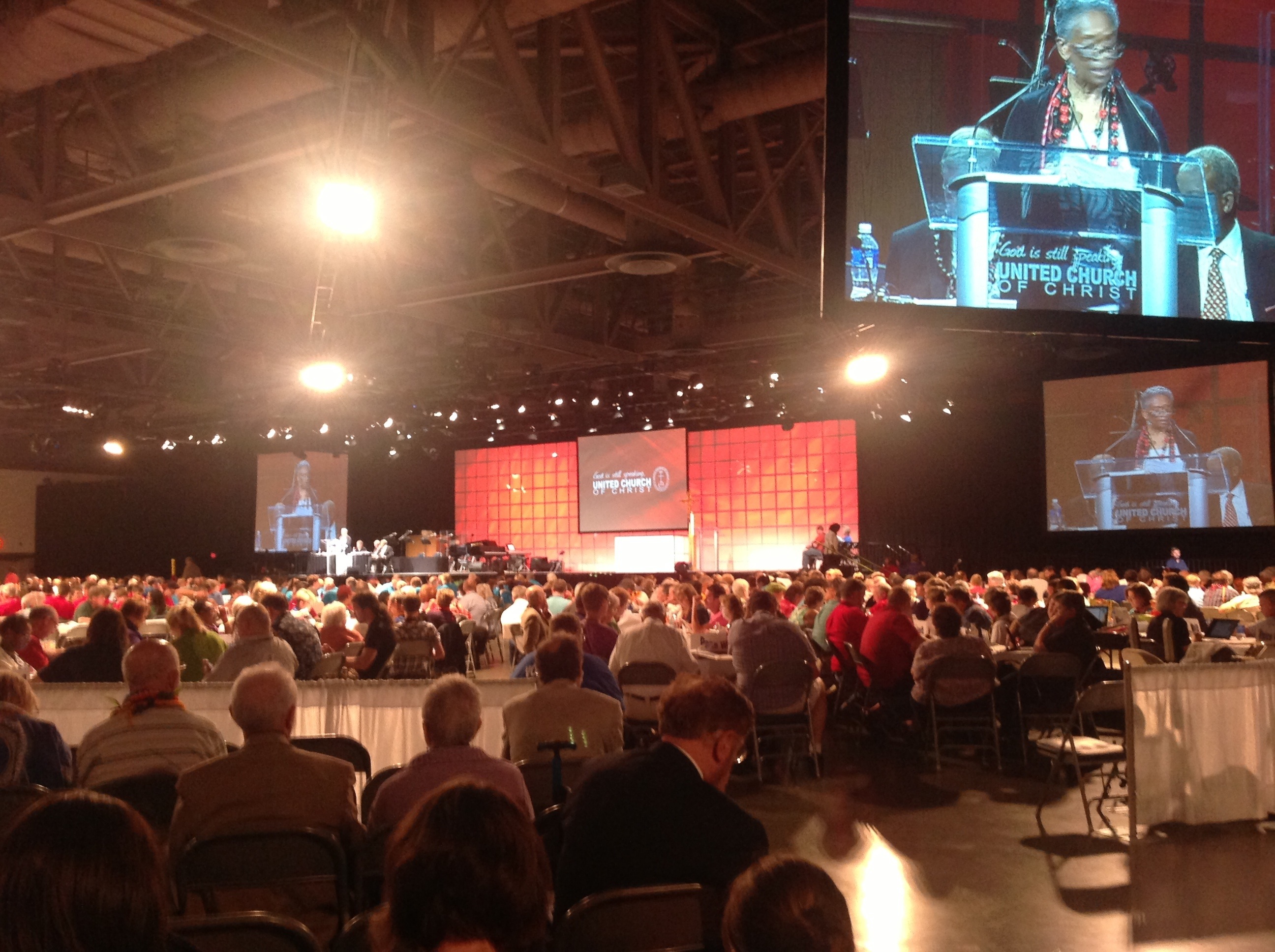
When I sit here seeing these resolutions debated, whether because of the content or alphabetizing a list, I don’t see complete uniformity.

And I thank my God for this.

In many of our communities, there is a misconception. Those in our churches often see “the UCC supports” in newspaper articles and other press materials. But this isn’t fully true. The United Church of Christ gathers together to vote on issues. Some of these issues have much disagreement. When the UCC takes a stand on issues, it has taken their stance from a resolution at a previous General Synod. The majority has affirmed the position, but it never represents all UCC churches or congregants.

As I sit here, I know there is a great diversity of people sitting around me. I thank God for this. It forces me to open my eyes to the experiences of my neighbors. It forces me to reevaluate my beliefs and strengthen my position on issues. But sitting here, I am forced to keep in mind that those who oppose what I believe are humans. I see their faces. They are part of the Body of Christ along side of me.

If you ever get the chance to attend the UCC General Synod or the assembly of your denomination’s believers, take it. Your eyes will be opened to the relational God in your midst. You’ll see a denomination which reflects a diversity of beliefs. If you are open to celebrating your faith with a wide diversity of neighbors (and awareness that we are all made in God’s image), you will most likely feel that the United Church of Christ is for you. We reflect the true diversity of Christianity in a spirit of unity.

20130702-154925.jpg

Share this:

  • Share on Facebook (Opens in new window) Facebook
  • Share on X (Opens in new window) X
  • Share on Pinterest (Opens in new window) Pinterest
  • Email a link to a friend (Opens in new window) Email
  • Print (Opens in new window) Print
  • Share on LinkedIn (Opens in new window) LinkedIn
  • Share on Tumblr (Opens in new window) Tumblr
Like Loading...

General Synod Lesson #1 – – You Can’t Do Everything!

29 Saturday Jun 2013

Posted by mictori in Current Events, Life, Pop

≈ 1 Comment

Tags

General Synod, Jesus, Lazarus, progressive Christianity, two places at once, UCC General Synod 29, uccgs29, United Church of Christ

Here I am at the United Church of Christ General Synod day 2. Exhaustion is already coming upon me, but I think much of it is due to time change. Or maybe it’s information overload. Anyway, I’m cherishing the time I have here as many, many of my friends are present.

What makes me sad is that I’m realizing I can do everything. I can’t be everywhere.

Times conflict. From wanting to go to two workshops during our 2030 event on Thursday to wondering which workshop I should go to this afternoon, I wish I could do more. Learning is one of the primary reasons I come to Synod. And I must choose which topics I am most passionate and in need of more information. Yesterday, I chose an intensive workshop on women’s equality issues. I would have loved to have gone to the workshop on taking care of our veterans, but for me, women’s issues are my number one passion. As a 2030 friend reminded a number of us the other day: “You can’t do everything at Synod.”

So I’m going to miss workshops that my friends are facilitating. And I’m going to miss workshops on fascinating topics. That’s life. I think the sooner we accept that we can’t be two places at once, the smoother life may go.

I remember a story in the Bible where Jesus was going to heal a young person when he was interrupted. When he got to the house, the young person had died. Likewise, when his friend Lazarus was ill he was working on other things. People weren’t exactly happy when Jesus came late, but he was human, and did the best he could.

Each of us at Synod will do the best we can connecting with friends, bringing new information to our churches and participating. We are giving 100 percent of the energy we have. We wish we could give more. But our bodies and brains are human. We pray that we remember that the spirit is always willing but the flesh is weak.

Share this:

  • Share on Facebook (Opens in new window) Facebook
  • Share on X (Opens in new window) X
  • Share on Pinterest (Opens in new window) Pinterest
  • Email a link to a friend (Opens in new window) Email
  • Print (Opens in new window) Print
  • Share on LinkedIn (Opens in new window) LinkedIn
  • Share on Tumblr (Opens in new window) Tumblr
Like Loading...

Shame is Humanity’s Worst Illness

20 Thursday Jun 2013

Posted by mictori in Current Events, Life, Music, Pop, Pop Culture

≈ Leave a comment

Tags

divorce, Grace, guilt, Kate Winslet, Melissa Etheridge, Mercy, Michelle Torigian, motherhood, New Testament, progressive Christianity, shame, Stephen Patterson, stigma, woman at the well

Recently, Melissa Etheridge called out Angelina Jolie’s choice to have a double-mastectomy as “fearful.” Etheridge commented that nutrition and stress cause cancer to begin in the body.

Unfortunately, Etheridge did nothing to help the stigma that already comes with cancer. Sure, not all cancers have stigmas. But when we hear that someone has cancer, often the first thing that comes to our mind was “they took care of themselves” or “they didn’t take good enough care of themselves.”

Through Ethridge’s words, shame was imposed upon someone else’s tough choice.

Shame and stigma seeps into each part of our daily lives, from our meal choices, to how we parent, to how we schedule our day.

According to the Bible, it didn’t take humans long to experience shame. Just one mistake and shame became so embedded in their souls. They experienced the shame even before God called them out on their actions.

Life is full of regrets. Of course, we should always continue to reevaluate our actions to make sure we aren’t damaging our neighbors, creation or ourselves. But, at some point, shame becomes so deeply a part of who we are that it holds us back from enjoying life and relationships.

As we continuously live under the umbrella of shame, whether our own or the shame we impose on others, we will never find the good enough in our lives. There is no room for grace or mercy. There is only room to live in perfection.

Perfection will never happen.

Jesus tried to banish shame when he touched the unclean. Yet, that message has not stuck well with Christians. If it had, people wouldn’t look down upon those with HIV/AIDS, STD’s or a variety of other “lifestyle” acquiring diseases. Jesus showered the woman at the well with grace and, yet, we manage to continue to shame people who have had divorces or multiple marriages. (Take for instance a comment recently made about Kate Winslet on being pregnant with her third child by a third husband.)

I remember in my seminary New Testament class with Stephen Patterson that he mentioned disease was the physical ailment and illness was the social stigma that accompanied many illnesses. While we may not look at the exact same things as unclean in the 21st century, we still have shame and stigmas associated with behavior and appearances.

Does it matter that someone had a child out of wedlock or got divorced? Does it matter that the person at the fast food restaurant is overweight? Does it matter that someone caught an illness because of an action or choice they made? Why do we shame women who breast feed or don’t breast feed? Why do we shame women for becoming stay-at-home moms or working full time? (And why is so much shame pour out on women?) Isn’t it tough for each of us to live day-to-day that maybe we should grant others a little bit of grace and mercy that we, ourselves, have also received?

Share this:

  • Share on Facebook (Opens in new window) Facebook
  • Share on X (Opens in new window) X
  • Share on Pinterest (Opens in new window) Pinterest
  • Email a link to a friend (Opens in new window) Email
  • Print (Opens in new window) Print
  • Share on LinkedIn (Opens in new window) LinkedIn
  • Share on Tumblr (Opens in new window) Tumblr
Like Loading...

Sermon: Clean or Unclean? We’re All One.

16 Sunday Jun 2013

Posted by mictori in Current Events, Life, Pop Culture, Religion

≈ Leave a comment

Tags

Clean, discrimination, divorce, Galatians 2, homophobia, Jesus, LGBT, Luke 7, Luke 8, Martin Luther King Jr., Michelle Torigian, race, racism, segregation, Sermon, St. Paul United Church of Christ, UCC, Unclean

This sermon was delivered at St. Paul United Church of Christ, Old Blue Rock Road, Cincinnati on June 16, 2013.

Luke 7:36-8:3
Galatians 2:11-21

Back in 1963, Martin Luther King Jr. said that the 11 o’clock hour on Sunday morning is the most segregated time of the week. People of different races, ethnic groups attend their own churches. People of various political or theological views also huddle together in their own faith communities.

Even in a 2012 article, it was found that only seven percent of churches with less than 1,000 attendance are multiracial.

We think we’ve come far in this world. No more segregated water fountains. Interracial couples are legally allowed to marry all over our country where it wasn’t legal a few decades earlier. Yet, very often people of a certain color live in one neighborhood while another race lives in a separate area. And, like in 1963, we still celebrate God in very different spaces.

People always use scripture or faith to find ways to separate the “us” from “them” and to distance themselves from “the other.” Back in the 1800’s people used to scripture and faith to justify both slavery and abolition. Texts from Ephesians 6 and Titus 2 were used to affirm slavery whereas proponents of abolition looked at the ongoing Biblical themes of justice and equality to affirm their stance. Still today, there are multiple issues that one side affirms with Scripture as the other side opposes the issue with Scripture as well. And this keeps our communities divided and ever so segregated.

Why do we have this mentality of us versus them? Of course, it’s not new.

In the gospel reading from Luke, we see Jesus eating with a Pharisee. So, yes, Jesus associated with those with greater societal standing. And then a woman who the world sees as the “other” or somehow “less than” comes in and showers Jesus with attention. Jesus affirms that he experiences more love and hospitality from the woman with the lesser reputation than the Pharisee with the better reputation.

We don’t know much about this woman except that she was a sinner. We don’t know what type of sins she engaged in. They could be referring to her more as a law-breaker rather than a sinner. But wasn’t the Pharisee a sinner too?

The Luke text reminds us that Jesus associated with all types of people: women, the unclean, those who were sick. In fact, he didn’t just hang out with them, but he touched them when healing. He allowed them to touch him too. Whether it was touching dead corpses, people with leprosy or the woman with the hemorrhage, when Jesus came in touch with these people, he became unclean like them – at least according to Jewish Law. Scripture never says he went through purification rituals each evening. As our Wednesday study class had learned the other night from the Saving Jesus Redux video, Jesus had become unclean to relate and save the unclean.

If anyone was allowed to be judgmental, it was Jesus. But even Jesus wasn’t that judgmental about sins. He focused his life and ministry on showing love and grace.

In the reading from Paul’s letter to the Galatians, Cephas used to eat with the uncircumcised Gentiles even though he was circumcised. Cephas would eat with those who followed very different food rules.

Then James and the group who followed the law, the Jewish members of the early Jesus movement, came back into town. In order to keep people happy or to have people continue to like them, Cephas and Barnabas ditched their relationships with the Gentiles. This is when Paul confirms that there is something greater that the law that some of them followed: grace. Through that grace, both Jews and Gentiles learn to place their differences aside.

During the first century, people segregated themselves because of their rituals and food choices. Sixty years ago it was water fountains and eating spaces. What are today’s issues?

This gives us the opportunity to ask ourselves from whom would 21st century Christians divide themselves and who would Jesus hang out with today? Those who have engaged in drug use in their past? Those who swear? Our gay brothers and sisters? Interfaith or interracial couples? Those who pass a hungry man on the street? Those who own guns? Those who are against guns? Democrats? Republicans? Liberals? Conservatives? Divorced people or people who live together before they’re married? Maybe all of the above???

Wherever Jesus was, it was probably one of the least segregated places in Israel because people from different groups of people wanted to hear about love and grace. They wanted to experience healing. And Jesus himself hung out with both the Pharisees and the unclean. If Jesus showered all sorts of people with love instead of intense judgment, should we do the same?

We may not agree with our neighbors on how they live their lives. As individuals, we each build our moral codes based upon how we relate Scripture to our sense of reasoning, experience and traditions. And we don’t see Scripture, reason, experience and tradition in the same ways. But we aren’t necessarily given a free pass to shun people just because our faith and their faith doesn’t line up. Just the opposite. We are called to be in the presence of those with whom we would never intend to associate.

Jesus was one who prioritized relationships over rules. He healed the sick on the Sabbath, touched the unclean making himself unclean and ate with all sorts of people. Might Jesus be asking us to place our relationships with others over legalism and minute differences? If Jesus, who some think was perfect, was able to associate with all sorts of people and become unclean to be like them, then we who are definitely not perfect are absolutely called to associate with other imperfect people. And as for me, I’ve experienced some of the greatest hospitality and unconditional love from those who many people consider “unclean” in our society.

The way we each look at faith, at our beliefs are going to be different. At a church like ours, it’s not what you believe because, let’s face it, we’re across the board. And thank God we’re not told what to believe. But even when we are different and we’re individuals, we’re still part of the body of Christ. We’re not called to agree with one another but be one in Christ. We are still in covenant with one another even as we live autonomously. There is the Great Connection, and whether we see it on this side of heaven or that side of heaven, we will see that all of us are loved by God and called to do the same.

So as we go forward in asking ourselves “Where is God calling us” do we need to ask ourselves who is God calling us to invite and include? Are we needing to reflect on who we include and reach out to? What would this church look like if it were filled with those who are so different than us? This would be scary – – yet how would this help us to grow and live out the great commission that the Spirit has be nudging Christians to do for centuries?

As we abide in this most segregated hour of the week, let us find ways to bridge the great divide as there is no longer slave or free, male or female, clean or unclean, us or them, but, instead, one in Christ. Amen.

Share this:

  • Share on Facebook (Opens in new window) Facebook
  • Share on X (Opens in new window) X
  • Share on Pinterest (Opens in new window) Pinterest
  • Email a link to a friend (Opens in new window) Email
  • Print (Opens in new window) Print
  • Share on LinkedIn (Opens in new window) LinkedIn
  • Share on Tumblr (Opens in new window) Tumblr
Like Loading...

Is Any Prayer Stupid?

15 Saturday Jun 2013

Posted by mictori in Current Events, Life, Social Media

≈ 2 Comments

Tags

clinical pastoral education, CPE, God, Michelle Torigian, Prayer, progressive Christianity

Five years ago, during my time in Clinical Pastoral Education (CPE) as a chaplain, I made it one of my goals to become better at praying out loud. Now, until that point, I never felt confident in my public, impromptu/extemporaneous praying. My prayers never felt strong or fancy enough for others to hear.

During my CPE summer, I had many opportunities to pray aloud with the nursing home residents and their families. By the time the summer had concluded, I felt much better in my public prayers.

That doesn’t mean I still don’t get nervous praying out loud…

Recently, I wrote a prayer for online publication. One individual decided to call the prayer “goofy” in the comment section. They also said that the prayer “seems like a Facebook status with the word ‘God’ placed in front of it.”

People are allowed to think what they wish about my writing. However, if I am speaking from a genuine place of concern, is it “goofy?” And are many of our status updates just words of concern from our hearts? Don’t we want God to hear our status updates?

While it may seem there are goofy prayers being said or written, any time people try to connect to God through words (spoken or written), it’s a prayer. Any time we hold the ones we love, fear, dislike and don’t know in our hearts, it’s prayer. When we connect with the Divine in an effort to strengthen our ties to God, our neighbor and ourselves, it’s prayer. So what words work? And what words fall short?

I don’t believe God cares what words we use when we pray. I think God’s concern is that we take moments to reach out – sending love and healing into the universe.

So say what you want to say to God. God wants to hear it in any form. You can sing it, sign it or dance the prayer. Fluffy language will not make the prayer come true any faster. God accepts both frills and simplicity in prayers. If others think your prayer is stupid, God doesn’t. Keep praying – just as you are. God is bigger than any combination of words.

Share this:

  • Share on Facebook (Opens in new window) Facebook
  • Share on X (Opens in new window) X
  • Share on Pinterest (Opens in new window) Pinterest
  • Email a link to a friend (Opens in new window) Email
  • Print (Opens in new window) Print
  • Share on LinkedIn (Opens in new window) LinkedIn
  • Share on Tumblr (Opens in new window) Tumblr
Like Loading...

Where the Imperfect and Perfect Meet

07 Friday Jun 2013

Posted by mictori in Current Events, Life, Pop

≈ 1 Comment

Tags

Church, God, Grace, Holy Spirit, imperfect, pastors, perfectionism

Reflecting on Sunday mornings as a pastor, I know I try to recall all of the announcements, prayer requests and logistical worship comments. Guess what? Even with writing myself notes I still forget things.

Most of our churches are not crafted like a production. Sure, some larger churches with multiple staff are able to spend more time and focus on the entertainment value of worship. They are able to dedicate more resources on their worship.

Even then, it’s still not perfect. Imperfections are cast in the shadow of the entertaining spectacle.

As much as we hope to be, every one of us pastors must face the reality of our own imperfections. Each and every liturgist, usher/greeter, children’s time deliverer, acolyte, communion steward, choir member and musician are imperfect. A candle will fail to light, a name in Scripture will be mispronounced and the pastor will forget to lift up one of our ill friends during our time of sharing prayers.

Each week, we do the best we can to make sure the focus is on God and our relationship with the Divine. In the process, mistakes will be made. Yes, unfortunately, they will distract from our focus on God. Yet, we continue to do our best, work at our mistakes for the good of God, our neighbors and, of course, the good of ourselves.

No matter how mild or severe the mistake, here’s the thing: God is still present. God is still active. The Holy Spirit continues to inspire, and God is still worshiped. No matter what little (or big) mistakes we make along the way, God still loves us and showers us with grace. God will never fail to meet us as we worship no matter how bad the preaching, singing or praying is in our congregations.

Share this:

  • Share on Facebook (Opens in new window) Facebook
  • Share on X (Opens in new window) X
  • Share on Pinterest (Opens in new window) Pinterest
  • Email a link to a friend (Opens in new window) Email
  • Print (Opens in new window) Print
  • Share on LinkedIn (Opens in new window) LinkedIn
  • Share on Tumblr (Opens in new window) Tumblr
Like Loading...

Mortality and Kindness

21 Tuesday May 2013

Posted by mictori in Current Events, Life, Pop, Pop Culture

≈ Leave a comment

Tags

kindness, Love, Moore, Newtown, Oklahoma, reconciliation, September 11, The Big C, Tornado

After watching the final episode of The Big C last evening, I reflected on how people will sometimes make peace on their deathbeds.  ***Spoiler Alert*** In the final hours of her life, Cathy, the main character, makes peace with her father.

I’m not sure how often deathbed reconciliations happen, but the thought of reconciliation must pass through the mind of many hospice patients and those who are estranged from them.

But sometimes we don’t have a time of dying to prepare ourselves to leave from this earth.  We don’t have time to tell the dying what they mean to us.

Death happens in an instant.

In light of the most recent tragic tornado in Oklahoma, I notice how more frequently people talk about hugging their children or being kind to strangers.  This happened after the Newtown shooting and September 11.  I even remember calling an ex-boyfriend after the September 11 tragedy in hopes to bring peace to our severed relationship.  The world was turned upside down, and it felt like the right time to reach out to him.

I can’t help but think that reminders of our mortality usually push us into a space of desired peace, kindness and reconciliation.  As we are reminded of our inevitable death, we reflect upon the meaning of our lives.  Maybe we think we haven’t loved enough or we haven’t tried to bring peace into our relationships.  We hold people closer – even the ones who have caused us pain.

And then, as time passes since the last tragedy, we let this sense of reconciliation and peace drift away.  We go back to screaming at the car driving to slow ahead of us.  We let out sighs of frustration when the person in front of us in the supermarket line has to run back into the store to get another 2-liter of soda.  We argue with the ones we love.

Not to be negative, but shouldn’t a sense of mortality become a part of the way we treat our neighbors?  Why do we expect that they or we will be around to speak words of love at a future time?  Why do we go out of our way to spread kindness to strangers when a tragedy touches our nation, but just go about our business when life flows as usual.

And why do we think there will be some magical time as we are in the process of dying when we can reconcile with our loved ones?  What if death happens in the blink of an eye, and we miss the chance to say “I love you.”

How do we want to live our one lifetime?  How do we want to live in this moment here and now?

We should pour out the same amount of love for one another whether or not there are shootings, bombings, tornadoes or any other major tragedy nearby, somewhere in our country or across our planet.

Share this:

  • Share on Facebook (Opens in new window) Facebook
  • Share on X (Opens in new window) X
  • Share on Pinterest (Opens in new window) Pinterest
  • Email a link to a friend (Opens in new window) Email
  • Print (Opens in new window) Print
  • Share on LinkedIn (Opens in new window) LinkedIn
  • Share on Tumblr (Opens in new window) Tumblr
Like Loading...

The Spoon Theory and Churches

15 Wednesday May 2013

Posted by mictori in Current Events, Life, Pop, Pop Culture

≈ Leave a comment

Tags

discernment, God, Small Churches, Spoon Theory and Churches

SpoonPeople with chronic illnesses are familiar with the Spoon Theory, an illustration of restricted energy.  In her writing, Christine Miserandino describes her limited energy by giving her friend twelve spoons.  Each spoon represents an activity.  Simple tasks like getting dressed or making the bed can cost one spoon.  By the end of the day, no “spoon”, or energy, remains.

This illustration is a reminder that people with limited energy must make decisions on how they will spend their energy for the day.  If they push themselves too hard one day and run out of spoons, they must borrow against the next day, leaving less energy for tomorrow.

Similarly, some of our churches only have so much energy and resources.  Unlike churches that have huge membership or endowments – or unlimited spoons, small churches with limited resources have so many spoons for the day, week or month.  No longer do they have a plethora of liveliness and warm bodies like they did back in the 50’s or 60’s.

With only so many people to serve on a number of different committees, a small number of the lay persons in our communities will spend countless hours working on programs.  Eventually they will find burnout.

Which is why small or limited churches must remember they are human institutions filled with human bodies.  Even though churches and people are limited, God is not.  Therefore, this is a time for us to turn to God in discernment.  Instead of beating ourselves up wondering why we only have so much energy, we should ask ourselves “Where does God want us to spend our time?”

By this discernment process, we aren’t spending the energy and resources we don’t have and burning out our entire congregation.  Instead, we are focusing our time, talent and treasures in ways that God is calling us.

This may mean ending certain groups that have been a piece of the church’s life for the past 50 years.  A fundraiser that worked well for our church ten years ago may not be bringing in the money anymore.  Is it time to try a new way of raising funds?  It may mean restructuring the governing boards.  People in our churches will grieve old ways of being church.  They will lament as they discard of programs that their parents created.  But maybe by letting go, we can find new life.  Maybe it is like the Jesus story: when Jesus the Christ released his spirit, he found new energy through the resurrection.

Similar to a person with a chronic, energy-depleting illness, a small church is not a dead or dying church.  There is plenty of life in that congregation.  The Spirit’s breath continues to flow.  But before exhaustion takes away our breath, now is the time to stop spinning wheels and squandering energy and listen for the still-speaking God around us.

Share this:

  • Share on Facebook (Opens in new window) Facebook
  • Share on X (Opens in new window) X
  • Share on Pinterest (Opens in new window) Pinterest
  • Email a link to a friend (Opens in new window) Email
  • Print (Opens in new window) Print
  • Share on LinkedIn (Opens in new window) LinkedIn
  • Share on Tumblr (Opens in new window) Tumblr
Like Loading...

Affirming All Women in Church on Mother’s Day

11 Saturday May 2013

Posted by mictori in Current Events, Life, Pop

≈ 3 Comments

Tags

Childless, Childlessness, Christianity, Church, Infertility, Mother's Day, Mother's Day 2013

“Women will be saved through childbearing.” — 1 Timothy 2:15

For some, motherhood has given purpose to your life. God has called to you be a mother, and you are living out your call in this sacred vocation. Most days, you experience the Divine in your role as mother.

Through life circumstances, many of us have not experienced the blessing of motherhood. Some have not found the right spouse or partner with whom to raise a child, and single parenting is not an option. Others suffer from medical conditions that prohibit them from birthing a child. Many women in our midst have recently experienced a miscarriage, have given birth to a still-born baby, experienced an unsuccessful adoption attempt, given up a child for adoption or have lost a child because of death.

Does your church reward the woman with the most children or the newest mom? During your Mother’s Day worship, do your leaders ask all moms to stand up while all of the other women sit in shame? Many women skip church on Mother’s Day because the pain of childlessness will hang heavy on their hearts. One woman experiencing this, Amy, wrote of her ordeal of being in church on Mother’s Day as a childless woman. When mothers were asked to stand, she noted “Real women stood, empty shells sat.”

Many women in our lives are not nor will never be mothers — either because of infertility or because they do not feel called to have children. But their value is not less as they are still equally cherished by God.

In looking at Scripture, we can see that motherhood is not a prerequisite to being useful in the eyes of God. In Esther 5, Queen Esther defies the laws of the kingdom and enters the king’s hall to stop the genocide of the Jewish people. Deborah was a judge and prophetess. Because of this role, she is called “a mother in Israel” (Judges 5:7b). Furthermore, Mary Magdalene is never portrayed as a mother but as a woman of great faithfulness. She is the first to see the risen Christ and spread the good news in John 20. Their calls from God had nothing to do with whether or not they had children.

God continues to use the gifts of all women in our society. God looks at each of us as complete humans today just as God does in Genesis 1. With this being said, motherhood should be entered into with love and freedom. Motherhood and mothering are beautiful calls. Yet if a woman is not called to be a mother or can not have children for various reasons, she should not feel shame. Childless women should continue to be accepted as whole members of the Body of Christ.

When the church gives awards to the oldest mother, new mothers or mothers of the most children, or gives gifts to only the women who have children, the church continues to reinforce specific roles of women. By the church neglecting the hearts of women who are not mothers, women continue to feel a sense of shame for “forgoing” the role of motherhood, even if it wasn’t a choice.

Granted, we should continue to appreciate mothers in our society and churches. Mothers spend countless hours trying to make lives better for their children. This should be celebrated but not at the cost of the hearts of the childless. What can we do to make Mother’s Day in churches a more inviting time for all women?

First of all, let us call forward the women of the Bible who would have struggled on a Mother’s Day. Sarah struggled as she watched Hagar give birth to Ishmael. Rachel watched as Leah gave birth to her husband’s children, while Rachel went, year after year, without birthing her own children. Tamar, daughter in law of Judah, watched as her husbands died, wondering if she would find the man who would get her pregnant. The daughter of Jephthah mourned the end of her life with her friends, knowing she would never bear children. Naomi lost both of her sons, and Ruth never had a child with her husband before he died. Hannah dealt with Peninnah, her husband’s other wife, as she teased Hannah relentlessly for being childless. Michal never bore the children of David. And Elizabeth suffered the upset for many years of never being able to have a child with Zachariah. Here we have a cloud of witnesses to childlessness and suffering. These are women whose experiences can speak to those of us without children. While most of these women eventually did give birth, their suffering is real. But we see the presence of God with each of these women as their wombs were closed or their circumstances did not afford them children.

Creating liturgies based upon these women in the Bible would validate the voices of the childless women in our congregations. It gives women a sense of validation to their pain and their circumstances.

As a church, it is crucial that we extend prayers to all women on Mother’s Day. We remember the women with many children, young children, a child who has recently died, those who have experienced miscarriage, infertility or painful births, those who have broken relationships with children and women who have not experienced motherhood at all.

Finally, Mother’s Day can be expanded to appreciate the contributions of all women. Mothering is more than being a mother. Our churches and societies are filled with nurturing, encouraging and strong women, whether they are mothers, teachers, pastors, neighbors, leaders or any women who takes us under their wing. Instead of giving gifts to only mothers, consider giving gifts to all adult women or any person who identifies as a mother. Let us validate the lives of all women — whether or not they are mothers. Let us encourage all women, whether married or single, mother or childless, as we continue the journey together. By doing so, women will be saved by being the women God called us to be.

Share this:

  • Share on Facebook (Opens in new window) Facebook
  • Share on X (Opens in new window) X
  • Share on Pinterest (Opens in new window) Pinterest
  • Email a link to a friend (Opens in new window) Email
  • Print (Opens in new window) Print
  • Share on LinkedIn (Opens in new window) LinkedIn
  • Share on Tumblr (Opens in new window) Tumblr
Like Loading...
← Older posts
Newer posts →

CCblogs Network

CCblogs Network

RevGalBlogPals

RevGalBlogPals
Follow Michelle L. Torigian on WordPress.com

Michelle L. Torigian

Michelle L. Torigian

Rev. Michelle Torigian's Instagram

No Instagram images were found.

Archives

  • November 2025
  • October 2025
  • August 2024
  • June 2024
  • May 2024
  • April 2024
  • March 2024
  • January 2024
  • December 2023
  • November 2023
  • September 2023
  • July 2023
  • May 2023
  • April 2023
  • March 2023
  • February 2023
  • January 2023
  • November 2022
  • October 2022
  • September 2022
  • July 2022
  • April 2022
  • March 2022
  • December 2021
  • November 2021
  • October 2021
  • September 2021
  • June 2021
  • April 2021
  • March 2021
  • December 2020
  • November 2020
  • October 2020
  • September 2020
  • August 2020
  • June 2020
  • May 2020
  • April 2020
  • March 2020
  • February 2020
  • January 2020
  • December 2019
  • November 2019
  • September 2019
  • August 2019
  • June 2019
  • May 2019
  • April 2019
  • March 2019
  • February 2019
  • January 2019
  • December 2018
  • November 2018
  • October 2018
  • September 2018
  • August 2018
  • June 2018
  • May 2018
  • April 2018
  • March 2018
  • February 2018
  • January 2018
  • December 2017
  • November 2017
  • October 2017
  • September 2017
  • August 2017
  • July 2017
  • June 2017
  • May 2017
  • March 2017
  • February 2017
  • January 2017
  • December 2016
  • November 2016
  • October 2016
  • September 2016
  • August 2016
  • July 2016
  • June 2016
  • May 2016
  • April 2016
  • March 2016
  • February 2016
  • January 2016
  • December 2015
  • November 2015
  • October 2015
  • September 2015
  • August 2015
  • July 2015
  • June 2015
  • May 2015
  • April 2015
  • March 2015
  • February 2015
  • January 2015
  • December 2014
  • October 2014
  • September 2014
  • August 2014
  • July 2014
  • June 2014
  • May 2014
  • April 2014
  • March 2014
  • February 2014
  • January 2014
  • November 2013
  • October 2013
  • September 2013
  • August 2013
  • July 2013
  • June 2013
  • May 2013
  • April 2013
  • March 2013
  • February 2013
  • January 2013
  • December 2012
  • November 2012
  • October 2012
  • September 2012
  • September 2011
  • December 2010

Blogroll

  • A Southern Pastor's Life in the North
  • Ancient/Future Faith
  • Associated Luke
  • Coffeehouse Contemplative
  • Emily C. Heath
  • For the Someday Book
  • Go and Tell with Grace
  • Katie Steedly
  • Liturgy Geek
  • musings about liturgical adventures, poetic journeys and such
  • One Whole Step
  • Reflections of Ryberg
  • Scattered Graces

Tags

Advent advent prayer Advent prayers anxiety Armenian Genocide Body of Christ careers Childless Childlessness Christ Christianity Christmas Church Communion Communion Liturgy Coronavirus COVID-19 death depression divorce domestic violence Easter Endometriosis Epiphany Feminism God Grace Grey's Anatomy grief grief prayers Healing Holy Week Hope Infertility Jesus Justice Lent Lenten Prayers LGBT Life Liturgy loss of loved one loss of parent Love Mental health Mother's Day motherhood mourning National Day Prayers pain Prayer Prayers progressive Christian progressive Christianity Progressive Christianty Psalm 139 Quarantine racism rape Resurrection sexism sexual assault Single Singlehood single in the sanctuary Social Justice Surgery Thanksgiving UCC United Church of Christ Vashti vocational prayers vocations widows worship

Categories

  • Advent prayers
  • Be the Church
  • Church Life
  • Communion Liturgy
  • COVID Prayers
  • Current Events
  • Epiphany Liturgy/Prayers
  • grief
  • Health
  • Holidays
  • Hygge
  • Lent Prayers
  • Life
  • Liturgy
  • Movies
  • Music
  • National Day Prayers
  • National Donut Day
  • Poetry
  • Pop
  • Pop Culture
  • Prayers
  • Quarantine Liturgy and Prayers
  • Religion
  • Single in the Sanctuary
  • Social Justice
  • Social Media
  • Sports
  • Television
  • UCC Statement of Faith
  • Vocation Prayers
  • Wordpress Blogger University

RSS Michelle L. Torigian

  • A Prayer for ADHD Awareness Month
  • A Mean Girls Day Blessing
  • A Blessing of the Cats
  • A Prayer for National Donut Day
  • A Lament of a Misogynistic Speech
  • A Blessing for the Words We Need
  • A Lament for Constant Anxiety
  • A Blessing of the Storytellers
  • A National Backward Day Prayer
  • A Prayer When Missing Our Loved Ones

Enter your email address to follow this blog and receive notifications of new posts by email.

Join 322 other subscribers

Pages

  • Email Sign Up
  • Following me around the web…
  • Liturgies for the “Be the Church” Series
  • Quarantine/Pandemic Prayers & Liturgies
  • Sermons on Video
  • Single in the Sanctuary
  • Vocational Prayers
  • Want to know about me?

Blogroll

  • A Southern Pastor's Life in the North
  • Ancient/Future Faith
  • Associated Luke
  • Coffeehouse Contemplative
  • Emily C. Heath
  • For the Someday Book
  • Go and Tell with Grace
  • Katie Steedly
  • Liturgy Geek
  • musings about liturgical adventures, poetic journeys and such
  • One Whole Step
  • Reflections of Ryberg
  • Scattered Graces

Archives

  • November 2025
  • October 2025
  • August 2024
  • June 2024
  • May 2024
  • April 2024
  • March 2024
  • January 2024
  • December 2023
  • November 2023
  • September 2023
  • July 2023
  • May 2023
  • April 2023
  • March 2023
  • February 2023
  • January 2023
  • November 2022
  • October 2022
  • September 2022
  • July 2022
  • April 2022
  • March 2022
  • December 2021
  • November 2021
  • October 2021
  • September 2021
  • June 2021
  • April 2021
  • March 2021
  • December 2020
  • November 2020
  • October 2020
  • September 2020
  • August 2020
  • June 2020
  • May 2020
  • April 2020
  • March 2020
  • February 2020
  • January 2020
  • December 2019
  • November 2019
  • September 2019
  • August 2019
  • June 2019
  • May 2019
  • April 2019
  • March 2019
  • February 2019
  • January 2019
  • December 2018
  • November 2018
  • October 2018
  • September 2018
  • August 2018
  • June 2018
  • May 2018
  • April 2018
  • March 2018
  • February 2018
  • January 2018
  • December 2017
  • November 2017
  • October 2017
  • September 2017
  • August 2017
  • July 2017
  • June 2017
  • May 2017
  • March 2017
  • February 2017
  • January 2017
  • December 2016
  • November 2016
  • October 2016
  • September 2016
  • August 2016
  • July 2016
  • June 2016
  • May 2016
  • April 2016
  • March 2016
  • February 2016
  • January 2016
  • December 2015
  • November 2015
  • October 2015
  • September 2015
  • August 2015
  • July 2015
  • June 2015
  • May 2015
  • April 2015
  • March 2015
  • February 2015
  • January 2015
  • December 2014
  • October 2014
  • September 2014
  • August 2014
  • July 2014
  • June 2014
  • May 2014
  • April 2014
  • March 2014
  • February 2014
  • January 2014
  • November 2013
  • October 2013
  • September 2013
  • August 2013
  • July 2013
  • June 2013
  • May 2013
  • April 2013
  • March 2013
  • February 2013
  • January 2013
  • December 2012
  • November 2012
  • October 2012
  • September 2012
  • September 2011
  • December 2010

Tags

Advent advent prayer Advent prayers anxiety Armenian Genocide Body of Christ careers Childless Childlessness Christ Christianity Christmas Church Communion Communion Liturgy Coronavirus COVID-19 death depression divorce domestic violence Easter Endometriosis Epiphany Feminism God Grace Grey's Anatomy grief grief prayers Healing Holy Week Hope Infertility Jesus Justice Lent Lenten Prayers LGBT Life Liturgy loss of loved one loss of parent Love Mental health Mother's Day motherhood mourning National Day Prayers pain Prayer Prayers progressive Christian progressive Christianity Progressive Christianty Psalm 139 Quarantine racism rape Resurrection sexism sexual assault Single Singlehood single in the sanctuary Social Justice Surgery Thanksgiving UCC United Church of Christ Vashti vocational prayers vocations widows worship
February 2026
S M T W T F S
1234567
891011121314
15161718192021
22232425262728
« Nov    

Category Cloud

Advent prayers Be the Church Church Life Communion Liturgy COVID Prayers Current Events Epiphany Liturgy/Prayers grief Health Holidays Hygge Lent Prayers Life Liturgy Movies Music National Day Prayers Poetry Pop Pop Culture Prayers Quarantine Liturgy and Prayers Religion Single in the Sanctuary Social Justice Social Media Sports Television UCC Statement of Faith Vocation Prayers

Recent Posts

  • A Prayer for ADHD Awareness Month
  • A Mean Girls Day Blessing
  • A Blessing of the Cats
  • A Prayer for National Donut Day
  • A Lament of a Misogynistic Speech

Create a free website or blog at WordPress.com.

Privacy & Cookies: This site uses cookies. By continuing to use this website, you agree to their use.
To find out more, including how to control cookies, see here: Cookie Policy
  • Subscribe Subscribed
    • Michelle L. Torigian
    • Join 322 other subscribers
    • Already have a WordPress.com account? Log in now.
    • Michelle L. Torigian
    • Subscribe Subscribed
    • Sign up
    • Log in
    • Report this content
    • View site in Reader
    • Manage subscriptions
    • Collapse this bar
 

Loading Comments...
 

    %d