Image

Jesus in Hell

Tags

, , , , , , , , ,

From The Garden of Earthly Delights – Hell Hieronymus Bosch (circa 1450–1516) [Public domain], via Wikimedia Commons

For a few years now, I haven’t really believed that Jesus descended to hell in those 40 hours between his death and resurrection.

I don’t believe he was a ransom for souls or was victor over some evil force.

But what if the Divine in Christ was the Divine which follows us into the depth of shadows, to Sheol like what was mentioned in Psalm 139:

7 Where can I go from your spirit?
Or where can I flee from your presence?
8 If I ascend to heaven, you are there;
if I make my bed in Sheol, you are there.
9 If I take the wings of the morning
and settle at the farthest limits of the sea,
10 even there your hand shall lead me,
and your right hand shall hold me fast.
11 If I say, ‘Surely the darkness shall cover me,
and the light around me become night’,
12 even the darkness is not dark to you;
the night is as bright as the day,
for darkness is as light to you.

I like to believe Jesus didn’t go to Hades in some afterlife escapade like it mentions in the creeds but, rather, experienced hell as he walked the earth.  He went to the depths of Sheol every time he touched the unclean, ate with people who had little dignity, and healed the expendables.

So Jesus went to hell… and Jesus brought heaven… each day in his ministry.

A Note from a Pastor to Loved Ones During Holy Week

Tags

, , , , , ,

imageDear people who I care for the most,

As you definitely know by now, it is Holy Week.  For those of us in the clergy/ministry business, we are attempting to accomplish in one week what we usually accomplish in about three or four ordinary time weeks.

In this process, our ideal selves are not shining this week.

I will want to stare at stupid reality shows, binge watch Netflix, play 60 consecutive games of Bejeweled Blitz, and surf the computer for hours in the evening.

I may eat one too many brownies or have an extra glass of wine this week.

I will want to pamper myself somehow… maybe a massage, a haircut and color or a mani/pedi.

I will either not sleep enough or I will sleep too well.

I will be Rev. Crankypants until Sunday morning is over.

I will be Super Crankypants if I am approached about taking care of something that can obviously be completed well after Easter Day.

There will be tears. Guaranteed.

There will also be an impromptu dance party at least once per day.  And I will be breaking out in song – most likely something from my college days and reminding me of a much simpler Holy Week.

The house will have extra clothes on the floor, the dishes will sit in the sink a little too long, and I will not have vaccuumed as I usually do.

I will remind people of things over and over again because I’m truly hoping not to drop one of my many balls in the air.

If you can not find me I will be at one of the following places: (1) church, (2) Michael’s, (3) the ice cream store, or (4) curled up in a corner somewhere as I wail and gnash my teeth.

My throat will start feeling scratchy by Thursday which brings on the added stress of extra needed sleep, gargling with salt water, and remembering to take any and every kind of vitamin that could possibly work.  Otherwise, I have to carve into my day a good hour and a half for a trip to the clinic.

Easter morning will be full of caffeine, adrenaline, and pure Holy Spirit joy.  And then once noon hits on Easter, I am a complete zombie.  Not normal Sunday afternoon zombie but full zombie-apocalypse walker.

I am so exhausted that I might as well post a “Do not disturb until the Thursday after Easter” sign on my door.

Holy Week Michelle is not typically who I am.  Well, sometimes it is – especially in the two weeks preceding Christmas.  And I will apologize over and over and over again as I try to keep everything moving forward.

All I ask is a bit of grace, a bunch of prayers, and maybe, a pint of double chocolate ice cream.  Thank you for loving me through the valley of the shadow of Lent and every other day of the year.

A Parkinson’s Prayer

Tags

, , , , , ,

parkinsons walkAs some reading this may know, my dad has Parkinson’s disease.  For the past few years, he’s been struggling with this neurological and movement disorder.  From what I’ve seen and know, Parkinson’s is an illness that progresses with time, and it has increasingly gotten worse in the past two years for my dad.

And that is why I pray for those struggling with Parkinson’s.

God of each movement and moment of our days,
In times of stiffness and shakes
And as bodies grow slower and slower,
enliven the souls of those struggling with Parkinson’s Disease.

Their tremors won’t end
And bodies resist movement.

As they wait for medicine to kick-in,
Walking becomes a privilege.
As muscles and nerves rebel against the norm,
Voices become soft and shaky.

Nothing is the same.

My God, my God, why have you forsaken the bodies of those we love?
Or did those bodies forsake themselves?
Why has Parkinson’s taken root in small fingers
And caused legs to be as rigid as two tree trunks.

Creative Creator –
On the days our loved ones feels like giving up
Lead them to a new path
And innovative ways to live.

As their autonomic nervous systems swirl in the sea of chaos
And their minds become a little less clear,
We ask for you to guide them in their movements forward.

Steady their feet when they are about to fall.
Smooth the emotional roller coaster that’s whirling in their heads
And lift what little spirit that remains within them.

In their corners remain loved ones-
Wives and husbands.
Children.  Grandchildren.  Friends.
God, infuse them with the energy they need
To nurse and walk alongside of those they love.

Spirit of Healing and Health,
Spirit of New Starts and Future Graces,
Open doors that have slammed shut
And give them the resurrection they desire.

May their dry bones and muscles and nerves
Dance among us once again.

The Big Release

Tags

, , , , , , , ,

Jesus answPhone Sept 2014 2052ered them, “The hour has come for the Son of Man to be glorified. Very truly, I tell you, unless a grain of wheat falls into the earth and dies, it remains just a single grain; but if it dies, it bears much fruit. Those who love their life lose it, and those who hate their life in this world will keep it for eternal life.”

John 12:23-25

It’s easy to cling to the status quo, the wheat stalk in our midst.

It’s easy to play it safe.  It’s much simpler to allow the voices that stagnate to overrule.  It’s much less complicated to keep lives and institutions in their current shapes.

But here’s the thing: if we keep gripping to the stalk on which we grow and not allow ourselves to die to the old and be reborn, we are going to die anyway.

If we cling to our current ways of living, the unhealthy will overrule our well-being.  If we cling to a destructive friendship or relationship, our soul begins to shrink.  If we cling to a rigid way of thinking about a subject, we will cut ourselves off of a still-speaking God in our midst.

This also applies to the way we are the church.

If we try to keep people happy, preventing anything from changing and anyone from grieving, we think to ourselves “well, at least we aren’t dying.  All must be well!”  We’ll remind ourselves that we aren’t shrinking.  We’re retaining members!  Instead, we’ll foolishly affirm to ourselves and others that we’re stable.  But we’re far from stable.  We are clinging to a dying stalk of wheat.

We allow ourselves to forget about all of the others that may come our way once we shed our status quo.  We will die in the lie of stability because stability doesn’t really exist.  And people-pleasing is only an illusion.

But everyone’s “happy.”  Or so it seems.

Here’s where I fall short: being a Christian isn’t about making others happy.  Jesus refused to make others happy.  Instead, he threw over tables in the Temple, healed on the Sabbath, touched the unclean and associated with expendable people.

I’ll be honest- as I give this more thought, I no longer believe it’s really about making God happy but, instead, allowing God’s call to draw us into life.  We are called to live the Christ-filled journey by releasing the old ways we in which we exist.  It requires us to stop the people-pleasing, cease clinging to the old and let go.

The path of Christ means free-falling into the air… wondering where we will land and having faith that we will land in soil that will nourish us.

Those who love their lives exactly the way things are right now will eventually lose it sooner or later.  We will get old and our bodies and/or minds will cease to work.  As we die we’ll wonder why we didn’t take more chances in life and free-fall into the call of God.

Likewise, those who love their churches exactly how they currently are and work to keep the status quo will eventually lose their church.  Our members will age.  We won’t have the bodies and monies to continue to run our current church structures and buildings.  As we cling to the old, the life and energy stirring around the church building will drift away.

Eventually, the church will die.  Only the hollow, echoing building will stand.  No more ministries.  No more worship.  No more laughter at 9:45a.m. on a Sunday morning.

Nothing.

Now, if we are willing to throw everything to the wind – our old perspectives, our old structures, our old procedures – just as this grain of wheat that Jesus spoke of, we have the potential to grow.  In this great release of the old, we may feel like we are killing off the past.  We may be tossing away everything we know.  And, yes, this means deep grief.

Living this wild life of instability forces us to stop the rigidity and start on the winding road to who-knows-where.  But the possibilities of growth are endless.  The laughter and energy may dwindle for a bit, but then begin to build.

Remember Jack’s magic beans after he sold the cow?  Without releasing the old (and maybe sacred) cow, a beanstalk wouldn’t have blossomed.

Just like many churches will sell their buildings, merge with other churches, advocate for something new… Basically everything they are into the wind…  Selling the sacred cows for magic beans.

But most of the time, when the seed releases and falls, the ground catches it, nurses it, and allows the seed to take root…

…And the buds of resurrection break through the ground.

The Kingdom of God Is Like a Glee Club…

Tags

, , , , , , ,

By Glee (Screenshot from a Glee episode.) [Public domain], via Wikimedia Commons

The Kingdom of God is like a Glee club where young people of all ethnicities, races, gender identities and expressions, economic levels, religions and perspectives come together to join their voices together in song…

Where the pregnant cheerleader, the rebel misfit, the disabled student, the girl with the stutter, the girl with a larger than life ego, the gay young man and the football player who lacks direction can unite in joy and share their gifts…

…Or so Jesus would say if he was telling a 21st century parable.

Now, I haven’t had much chance to watch Glee in the last couple of seasons.  But this year, I’ve revisited the show a few times and watched some of the last episodes including tonight’s finale.

Back in the fall of 2009, my group of fellow seminarians would get together each Tuesday night during our last year of seminary to watch Glee.  It was our ritual, joining with the diverse Kingdom of God to watch a show about the diverse Kingdom of God.  The weekly Sabbath hour of watching Glee became our time to fellowship together before the eventual parting of ways at the end of the year when we were called to different corners of the world to serve.

Glee was something to which many of us could identify.  Some of us had been bullied as young people.  Others had come out to their friends and family.  I think on some level, most of us felt like outsiders who came together with a common love and sense of call – just like Will Schuester and the Glee club.

In tonight’s finale, Rachel explains that Glee club is “Somewhere safe” and a place where people “learn from each other and be who we are including those who are different than us.  When we look back on our time here, we should be proud of what we did and who we included.”

Sue concluded with the following:

“It takes a lot of bravery to look around you to see the world, not as it is, but as it should be.  A world where the quarterback becomes best friends with the gay kid.  And the girl with the big nose ends up on Broadway. Glee is about imagining a world like that, and finding the courage to open up your heart and sing about it.”

The way Jesus explains the kingdom of God is this idyllic place, a place where all people are respected and given dignity.   All are experiencing the justice and peace that flows from God.  Through Rachel’s and Sue’s words, we are reminded that the ideal kingdom of God is a safe place where we learn from one another and where we appreciate each other’s gifts.  It’s a place where people who are extremely different from one another can join together to share life and build up our neighbors.

The Kingdom of God is like Glee, reflecting all of the similarities and differences between people – and the unity between them – joining together to make a melodic world.

Buddhism Reshaped My Easter

Tags

, , , ,

IMG_0185Let’s face it – Easter tends to be the most Christian holiday of the year.  Besides anything that’s bunny, egg, chocolate, or flower-related, the holiday centers around the resurrection of Jesus, the heart and head of our faith.

But last year, I adopted a Buddhist view of Easter… at least in my sermon.

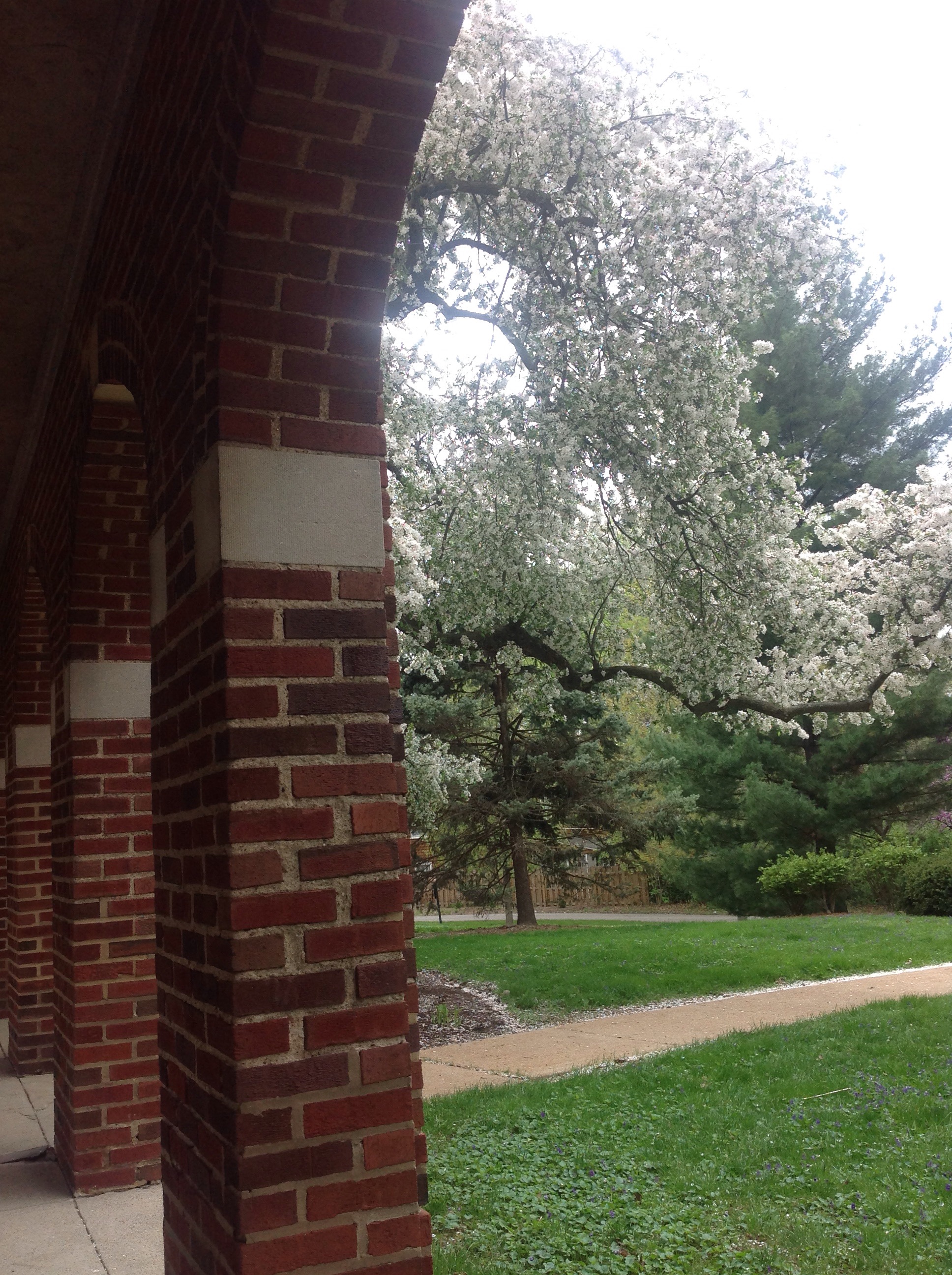
I recalled that each year right around this time, I head over a park on the other side of town.  The entrance to this park is lined with trees that, when they bloom, look like paradise.  I find sadness that this lasts only a short while.  Fortunately, I was able to visit the park right after they started blooming.  When I was over there yesterday, the pinkish-white petals had disappeared, and small buds of greened hung where the blooms had been.

There is sadness that fills my heart when I see the blooms gone for the year.  There’s a part of me that wishes the first days of spring could last all year, and the blossoms on the trees could last forever.

Of course, logically, I know this is part of the life cycle of the tree.  The trees are no longer in its beautiful spring state.  The petals drop to the ground, finding their death.  But in their death, the tree find its next phase.

We embrace much of our lives like we do like the blossoming trees.  We want life to stay a certain way, frozen in time.  But life is always changing.  Life starts, life ends.  Our bodies and our world are in constant motion.  From the mountains to our trees to our hair and our souls, we transform.  It’s concurrently beautiful and sad.

One of my best friends practices Buddhism.  When we have a chance to visit with one another, we have the best conversations about faith.  In reflecting on my sermon for last year’s Easter, the Buddhist principle of impermanence came to light. This principle is meditating on and deeply understanding that everything is impermanent, in a constant state of change and that everything will deteriorate.

She read to me excerpts from Thich Nhat Hanh’s book You Are Here which explained that impermanence and change is the heart of life and makes life possible.  When we reject impermanence, we reject life.  For hope lies in impermanence.

And in a roundabout way, we see that hope in resurrection story.

Mary Magdalene is weeping outside of the tomb, and Jesus the Christ calls her by name.  She then recognizes the risen Christ in her midst.  And then remembering all of the great times with Jesus during his earthly life, she wants to keep that with her.  She wants everything to be the same, and she clings to him.  Maybe she’s thinking “he won’t go away again.”  Maybe she’s thinking that “if I do something differently this time, he won’t die.”  I can’t say exactly what she was thinking, but she wanted the old ways of being with Jesus the Christ again.  But the Christ says otherwise – “do not hold onto me.”

What it says in the text is “do not cling” not “do not touch.”  We see later that it was ok for Thomas to touch Jesus.  I don’t think that it was a problem that this Christ was touched.  But what she was doing was holding on with all of her might in order to keep the pre-crucifixion, pre-resurrection Jesus with her.

In letting Jesus in his previous embodiment go, leaving the garden and running to spread the good news, I believe Mary embraces the hope that lies in impermanence.  She embraces the great change that happens with the Christ – from the original human body format to a format that transcends space and time.  That Christ goes with us wherever we go, and that Christ changes as the ways our life and world change.  When we meet new people or experience life in a new way, we understand Christ deeper.

It may seem odd that I speak of a Buddhist principle on Easter Sunday, but I wonder, how are we with changes in our lives, of letting things go, and then looking at embracing change as hopeful.

I remember what Thich Nhat Hanh says: “hope lies in impermanence.”  The tomb could not seal off the Christ from the rest of the world.  And while the death was traumatic, without the change in the form of the Christ, I don’t believe the good news would have gone beyond that small part of the world.  Would people know of the radical love of Jesus, of the way he validated the lives of those who were in the margins?

If Mary Magdalene would have staying in that garden right outside the tomb and kept holding on to the Jesus she once knew instead of sharing the Christ in its newest form, we wouldn’t have known the Good News of new life and resurrection.  That’s hope.  Maybe there were still tinges of sadness that resonated within her.  But I believe the privilege of sharing the good news of life and hope helped her to let go of Jesus the Christ in his previous form.

I’d like to think of Mary releasing Jesus like any of us releasing the beauty that leaves with the end of a season.  There is a tinge of sadness that still remains in me when the blossoms drop from the trees.  But with the changing trees and the falling flowers comes rich greenness for all to enjoy, full trees for people to rest under during the warm months.  If the trees didn’t change throughout the year, they would die.  That’s like us: if we don’t change constantly – our cells, our thoughts, our churches – we die as well.

So each year, when trees bloom and Easter rolls around, I recall the Buddhist principle of impermanence.  It’s given me the gift of seeing the transitions and changes that come with the death and resurrection of Jesus with a new depth and greater hope of new life.

This post was written as part of Synchroblog’s March 2015 theme “What I Appreciate about [Other Religions].”  Below are other blog posts that have been written as part of this theme.  The links do not necessarily reflect my perspective.

Finding the Grace in Divorce

Tags

, , , , , , ,

Abraham banishes Hagar and Ishmael; Sarah and Isaac look on. Engraving by R. Parr after G. Hoet. Iconographic Collections

In seminary I researched the Malachi 2:13-16 text:

“And this you do as well: You cover the Lord’s altar with tears, with weeping and groaning because he no longer regards the offering or accepts it with favor at your hand.  You ask, ‘Why does he not?’ Because the Lord was a witness between you and the wife of your youth, to whom you have been faithless, though she is your companion and your wife by covenant.  Did not one God make her? Both flesh and spirit are his. And what does the one God desire? Godly offspring. So look to yourselves, and do not let anyone be faithless to the wife of his youth. For I hate divorce, says the Lord, the God of Israel, and covering one’s garment with violence, says the Lord of hosts. So take heed to yourselves and do not be faithless.” (NRSV)

A portion of my work on the Malachi 2 text was studying the word “divorce.”  The Hebrew word for divorce as seen in Malachi 2 is found two other places: when Abraham banishes Hagar and Ishmael into the wilderness and when David’s son Amnon throws David’s daughter Tamar out after he rapes her.

Divorce in those cases has to do with one person who has the privilege (usually the man in Biblical times) not taking care of the other person, leaving them destitute in body, mind and soul.  Likewise, the Malachi text pertains to abandoning one’s wife and leaving her to survive with little resources.

Divorce happens.  Sure, God dislikes divorce – nobody likes divorce.  We don’t head into marriage expecting that our covenant will end.  We truly hope that our marriages and relationships will triumph over the statistics.

But sometimes, divorce is inevitable.  The covenant is broken through abuse, infidelity and other trust issues.  Sometimes, after much counseling, a couple will divorce because the relationship is no longer healthy.  People will change over the years, and couples will try their hardest to make the relationship work, but in the end will find peace in the dissolution of the marriage.

Yet there can be faithfulness even in divorce.  When we see divorced couples working together for the sake of their children or amicably splitting property in divorce settlements, we see two people loving God and neighbor the best they can through a challenging time.

Lastly, God gives grace in divorce.  God wants us to find happiness and mercy in our lives, and I believe God wants us to abide in hope and find love again.  Even in the case of Abraham and Hagar, both were given God’s gift of descendants through both Isaac and Ishmael.  We will find that blessings in our lives as well.

A prayer for those divorcing or divorced:

God of the coupled and uncoupled,
You sit with us in the shadows of our souls.
Your hope feeds us and your grace quenches our thirst,
And through your nourishment, we find movement towards tomorrow.

Bless those who are currently journeying through the wilderness of divorce.
Help them to see their estranged spouse as a person created in your image.
Bless their efforts in amicable settlements and custody arrangements.
Help them find new ways of being family, even if family has taken a new form.

God, we know your grace is always pouring upon us
And so we ask that you help us see that grace
In the moments when hope seems far
And shame seems too close to us.

Amen.

My Least Favorite Sunday

Tags

, , ,

16561871989_6111ecd81c_kI can say with little hesitation that my favorite Sundays each year are Easter and Pentecost Sundays.  The excitement that is generated on those two days fills the church and our hearts, sustaining me in body, mind and soul.

I’m sure I can’t be the only pastor or person writing or reading this who has a least favorite Sunday: Spring Forward Sunday.  We find ourselves waking up with one less hour of sleep because, let’s face it, we aren’t going to go to sleep an hour earlier on Saturday nights.  Whether we are working, relaxing or spending time with friends, our bodies aren’t usually ready to sleep earlier than usual, even if we plan for it.

This leaves us a little extra tiredness during worship on Sunday morning.  We’re ready for our afternoon nap soon after our Sunday morning events are complete.

I think there’s a little level of disappointment knowing that our day is noticeably shorter.  As we progress in our lives, we realize the value of each and every hour.  And we recognize that we’re a bit thrown off by this time adjustment.  What may seem like 3p.m. will really be 4p.m.  Our bodies may take a day or two to get used to this new time change.

However, I believe God’s grace blesses this shortened day.  While I dislike the one less hour of sleep,  I rejoice when I see the light around 7 p.m. or later.  I am reminded that light continues to come into the world, whether it’s the rays of sun or illumination of Christ.

So as we search for God in this wilderness season of Lent, even when we often travel through the shadows, our days are becoming longer and light is growing in our lives.

 (Adapted from the St. Paul UCC March 2015 newsletter)

What Color is That Dress???

Tags

, , , , , , ,

This week, the internet burst with comments and postings to discuss this dress:

Photo Credit: Swiked/Tumblr

My first thought was “Who cares?  It’s just a dress.  There are more important issues to discuss than the color of a dress: poverty, homelessness, trafficking, hate crimes, health care…”

And that’s basically what I initially posted on social media.  In response to my post, a friend reminded me that this is more than a dress.

Riiiiiiiiiight!

I saw a white and gold dress.  Yes, the dress is undoubtedly white and gold.  Undoubtedly.  (Am I right?) As I looked longer at the photograph, I wondered if the dress could be blue and gold.  Was it lighting and shadows that gave me this doubt?  Was my brain playing tricks on me?

I still had no idea how people saw the lace as black.  I truly tried to see it from their perspective – squinting my eyes and staring harder.  But I could only see gold or brown, not black, lace.

Maybe if I stood on my head I could see a different color trim…

Articles were released on the scientific reasoning behind how we perceive color.  A combination of factors aided whether people saw blue and black or white and gold: how the eyes are picking up color, how the brain works, and the lighting of the room.  (Being that I’m not a scientist, I won’t try to explain this, but check out these articles HERE and HERE.)

If something so objective as color can divide people, how much more will subjective topics like religion and politics come between people?  The dress becomes a concrete symbol of how we can perceive things differently than the people closest to us.

After giving it further thought, I wrote this on social media:

If there’s more than one way to see the colors of a dress then maybe there’s more than one way to see God and faith.

In seminary, I learned of the Wesleyan Quadralateral, a system where one establishes their sources of authority on Scripture, reason, tradition and experience.  The way many of us study Scripture differs, and sometimes there are conflicting accounts in the Bible.  Translations also play an impact on how we read scripture.

We also come from a spectrum of traditions with each one highly influencing our theological core.  If we are Protestant, we may find that our teachings lean heavily from Martin Luther or John Calvin more often than St. Augustine or Thomas Aquinas, two theologians who influence the doctrine of the Roman Catholics.  Even our individual churches and families of origin impact the ways tradition influences our beliefs.

Additionally, experience is the great lens through which we see life.  When we gather the information around us through the filter of our own joys and pains, we see only small pieces of a larger picture.

And because of the lesson of the dress, we can see that our brains reason differently, a point which should always be taken into account.

My friend was right: the dress is more than a dress.  It begs us to understand that we won’t see the world as our neighbors and that everyone comes to their beliefs through a multi-layered lens.

Through the exercise of the dress and knowing how our brain works in gathering information, this is the time for us to become a more understanding people.  It’s time for us to stop the shame and name calling of people who have different political and theological perspectives than we hold.  It’s time for us to stop claiming that such-and-such people will go to hell or that they won’t be accepted by God.

It’s time for us to see that no matter what color dress, theology, politics, or anything else we have or see, we are fully accepted by God and made in God’s image.

Patricia, Sarah, and the Women with (Some) Privilege – A RevGalBlogPals Post

Tags

, , , , , , , , , ,

Here’s a post I wrote for RevGalBlogPals section The Pastor Is Political:

The Pastor is Political – Patricia, Sarah, and the Women with (Some) Privilege